Parametric Studies
Lattice Studies
One chord family at a time, on squares, hexes, triangles and a Voronoi
Oct 28, 2026 Alexandria Phoenix 2.1
Overview
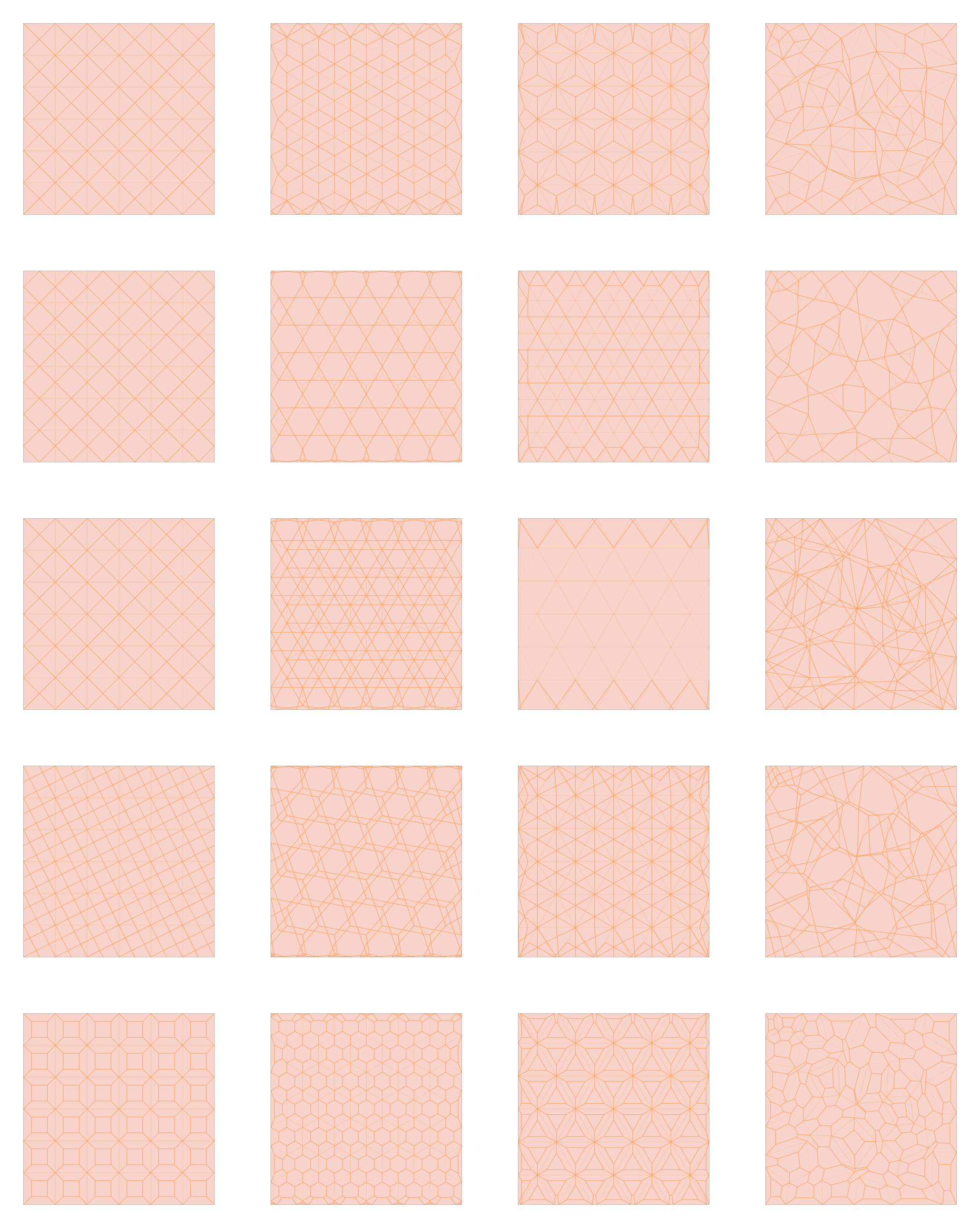
Lattice Pattern draws straight chords inside every cell. It reads each cell as its corners, edge midpoints, centroid and an inner ring of corners, and Pattern picks which of ten chord families join them. Each family draws one chord per corner, so one setting gives a coherent lattice on any cell, regular or not.
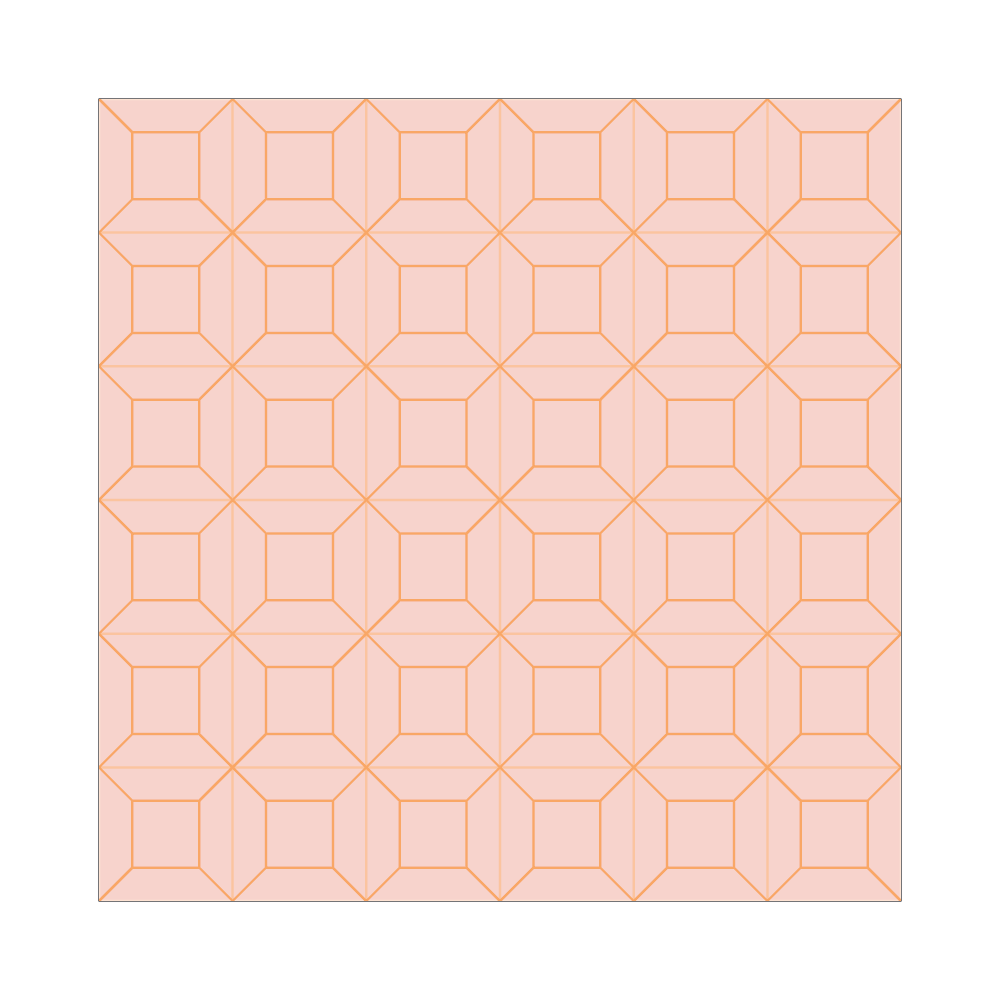
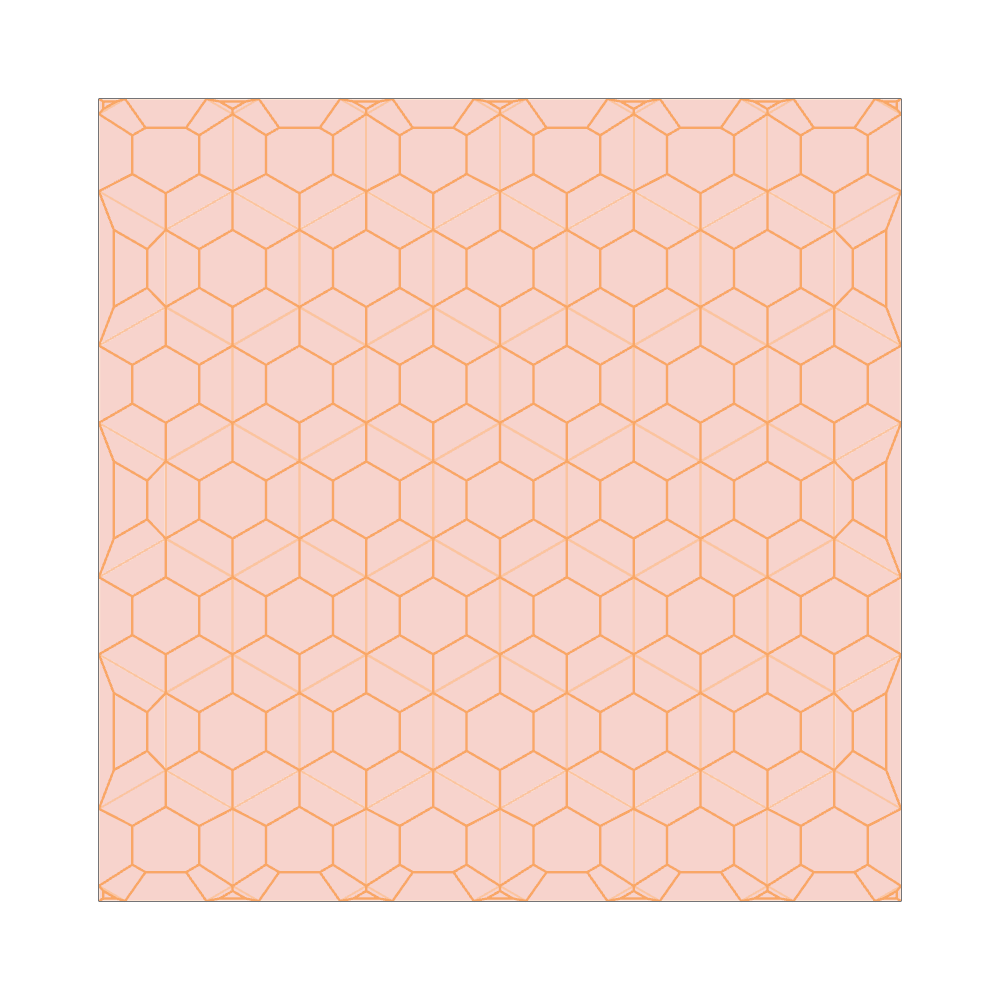
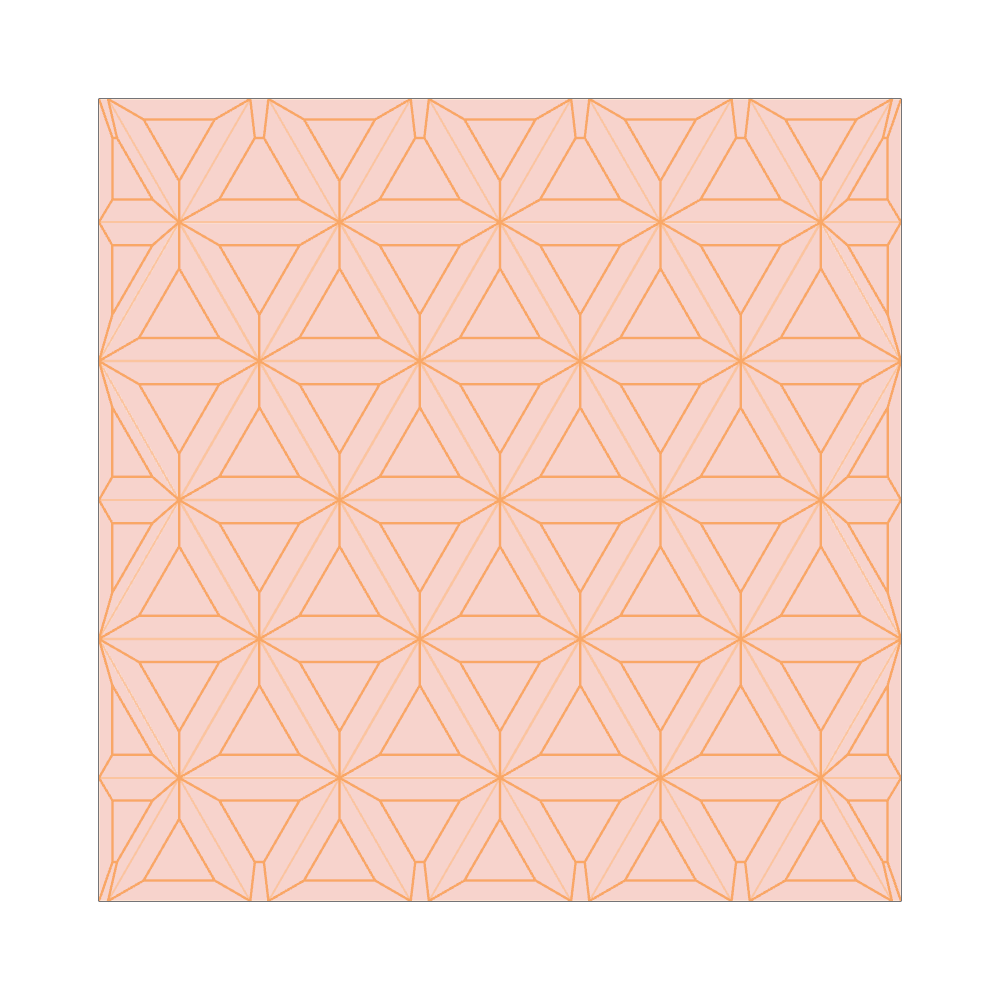
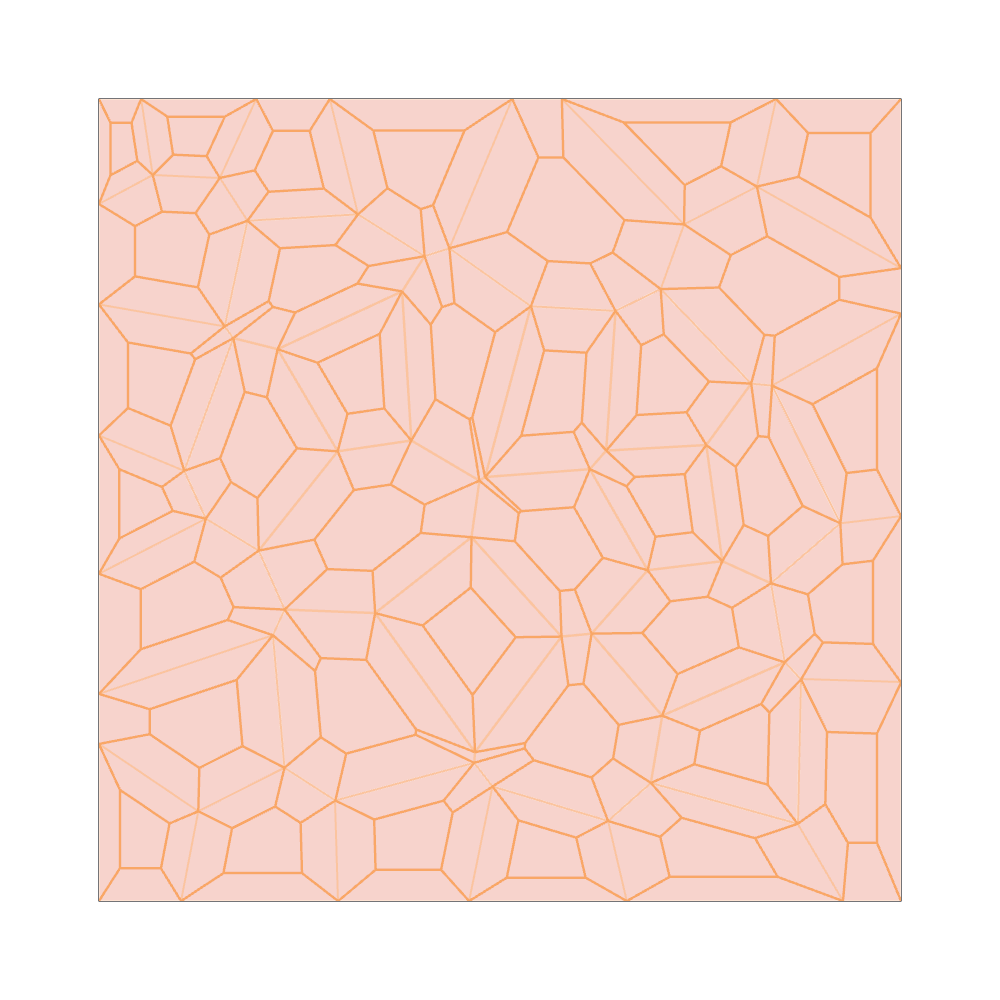
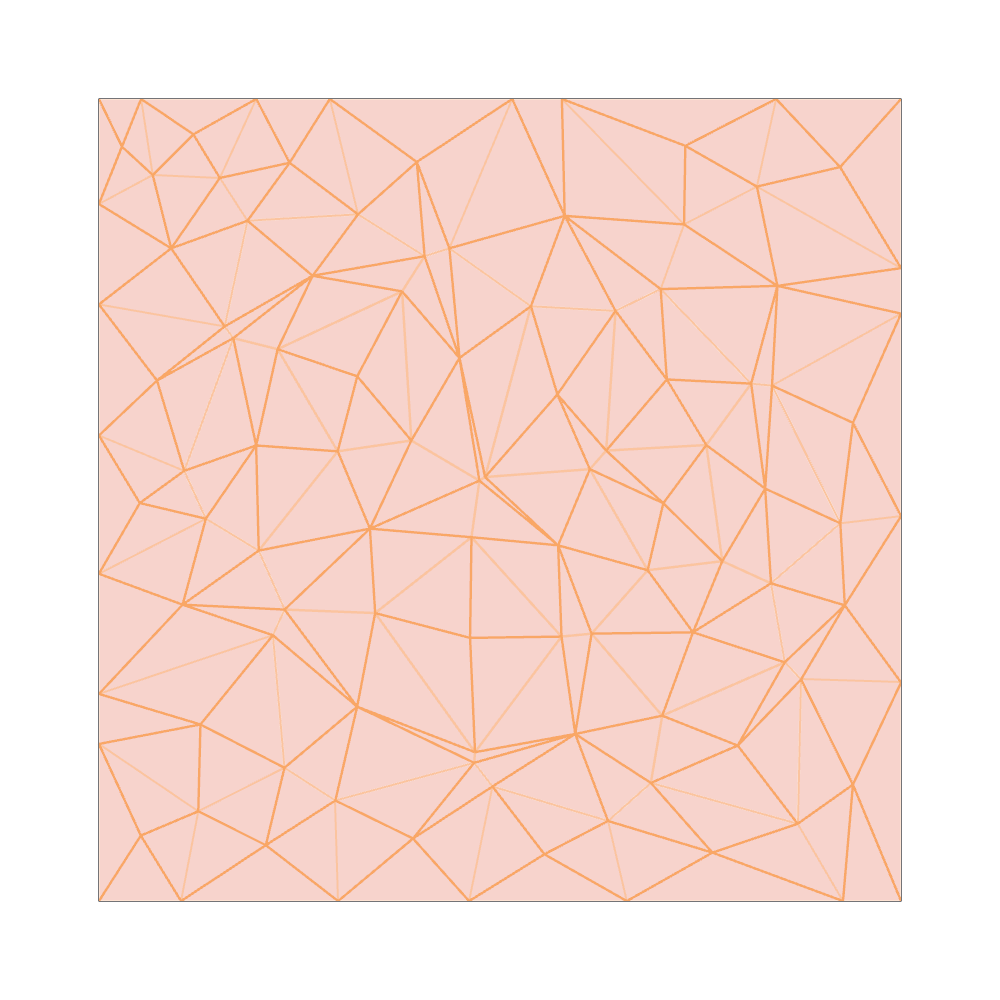
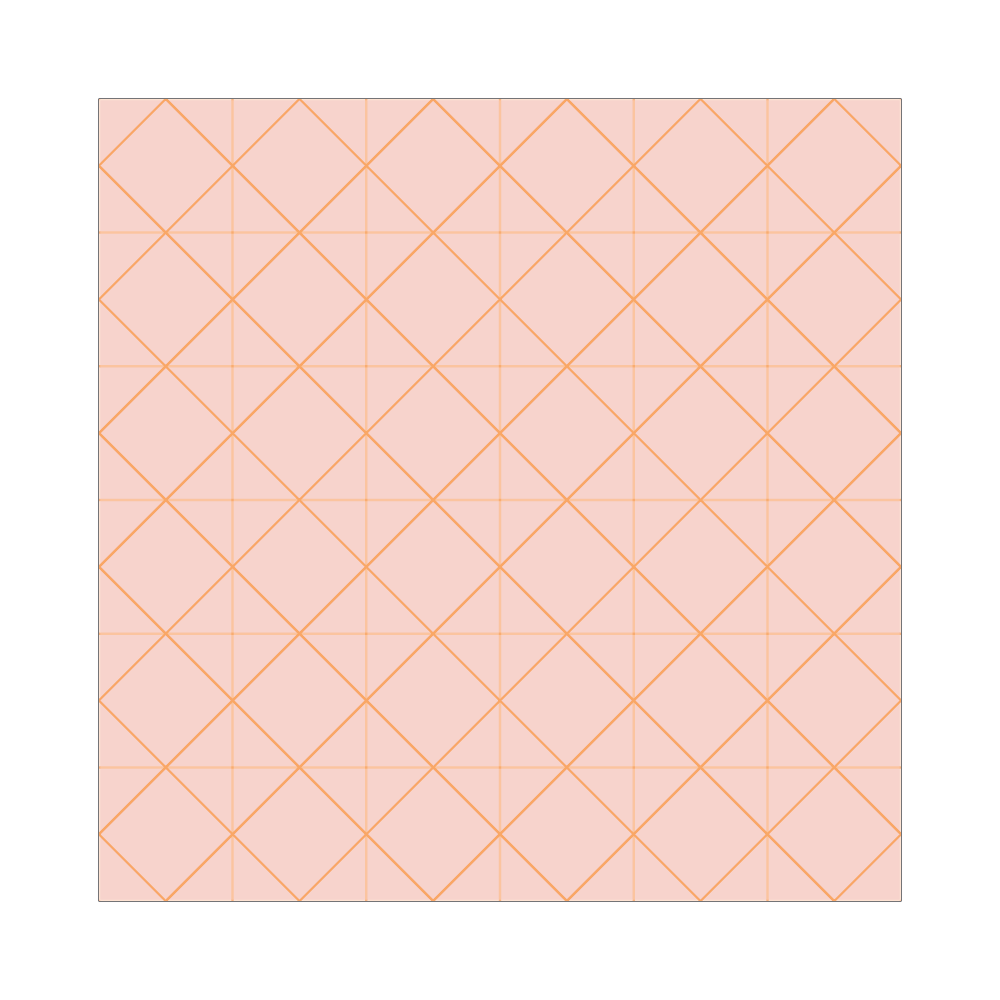
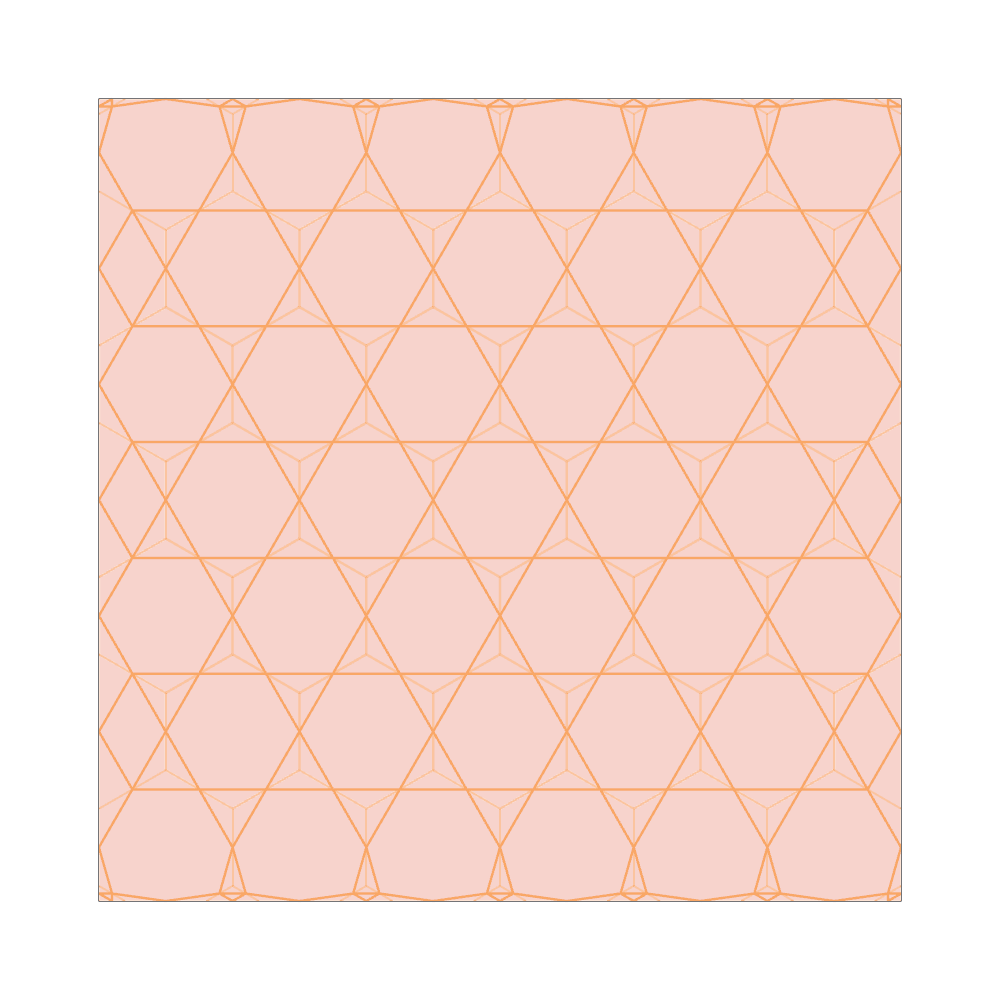
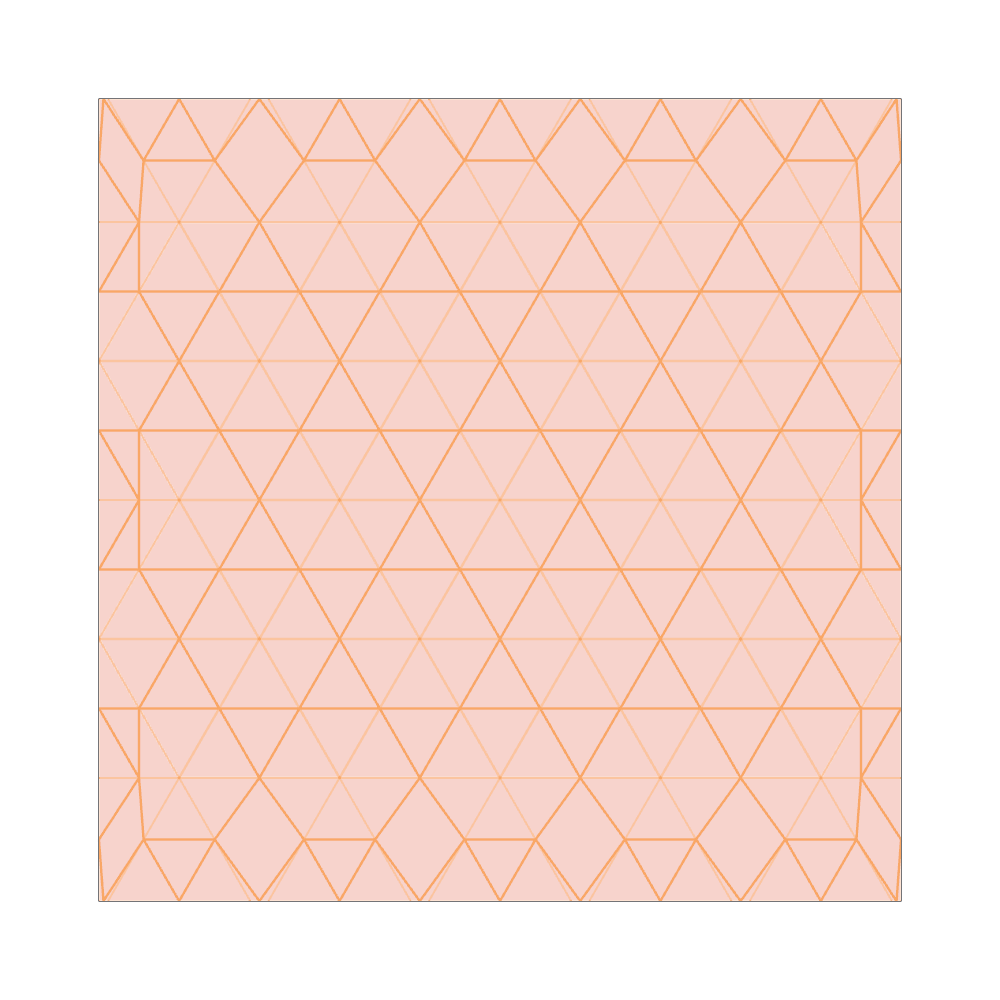
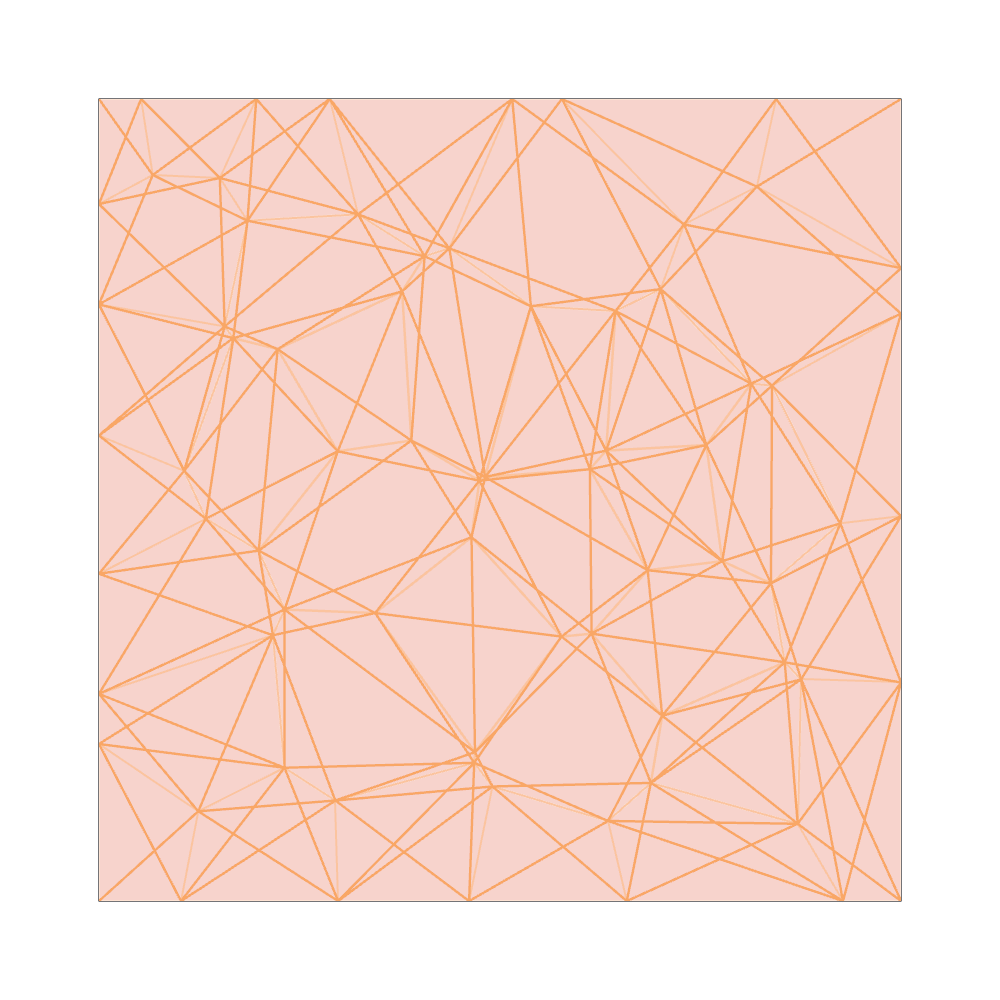
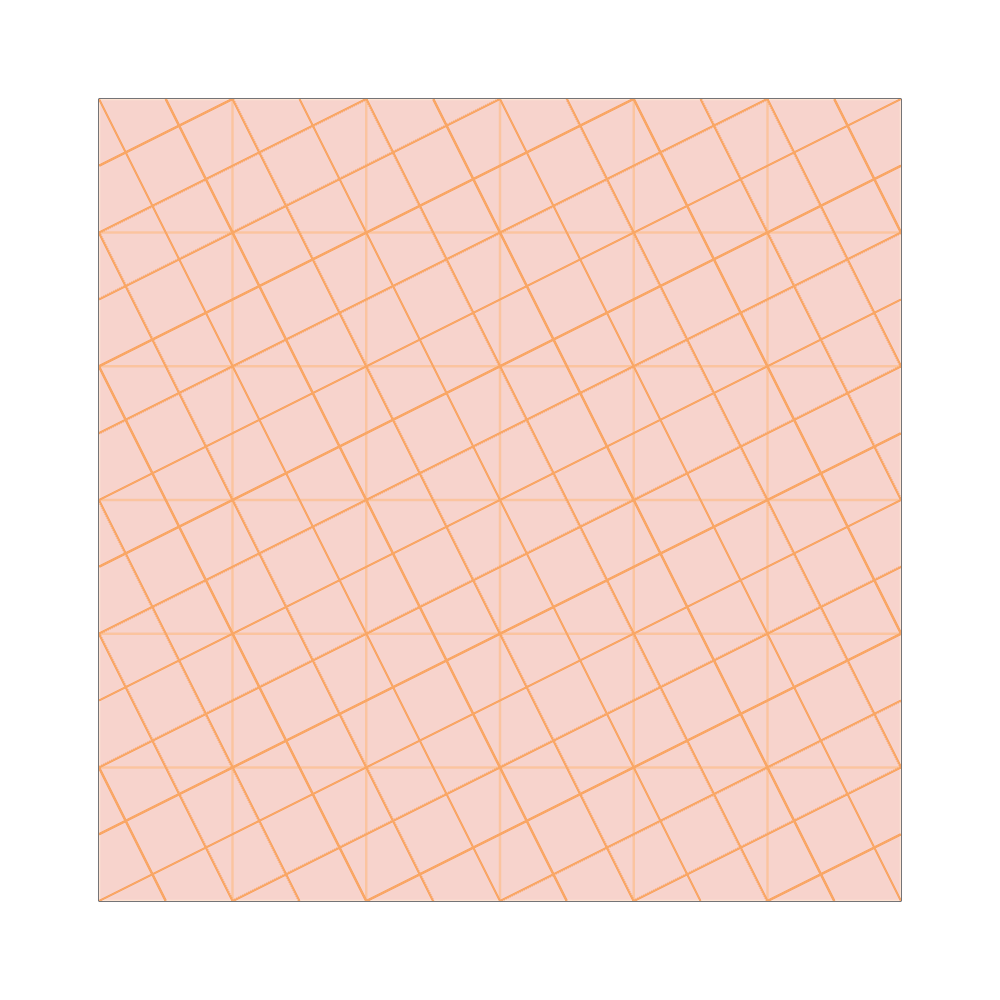
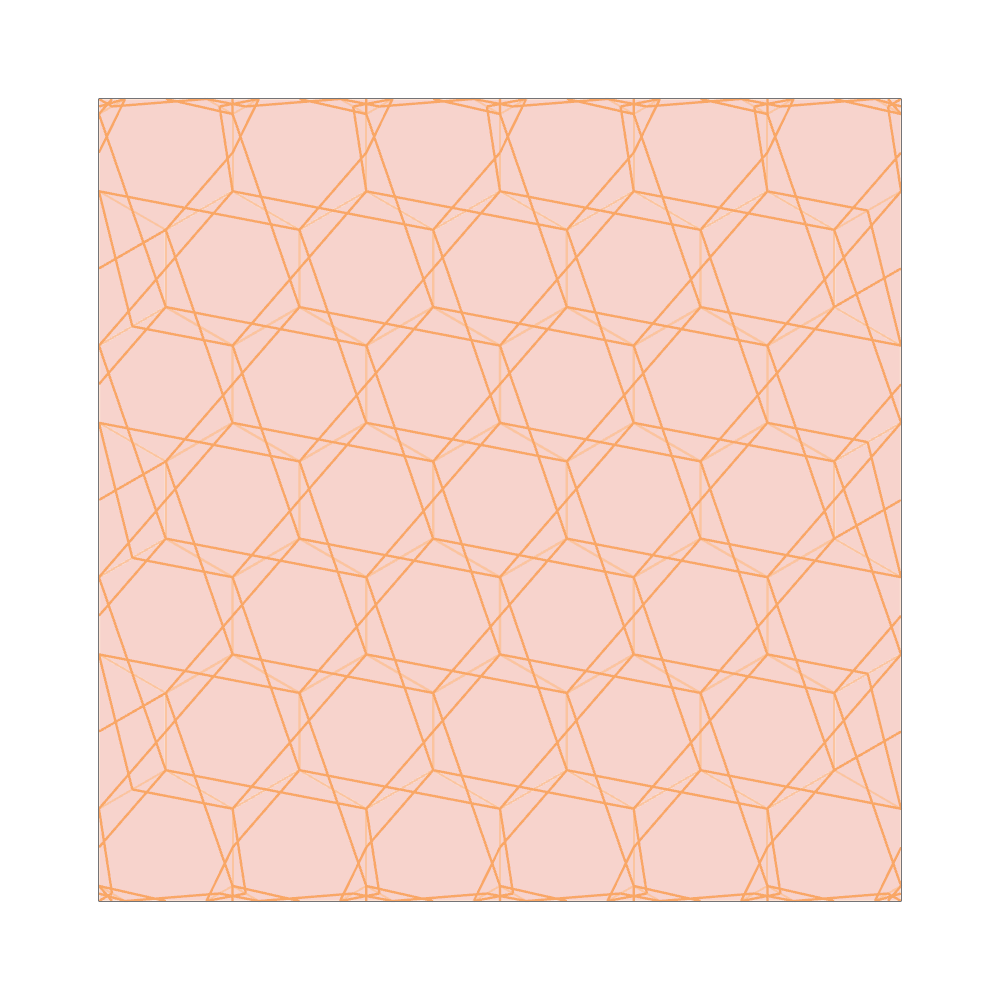
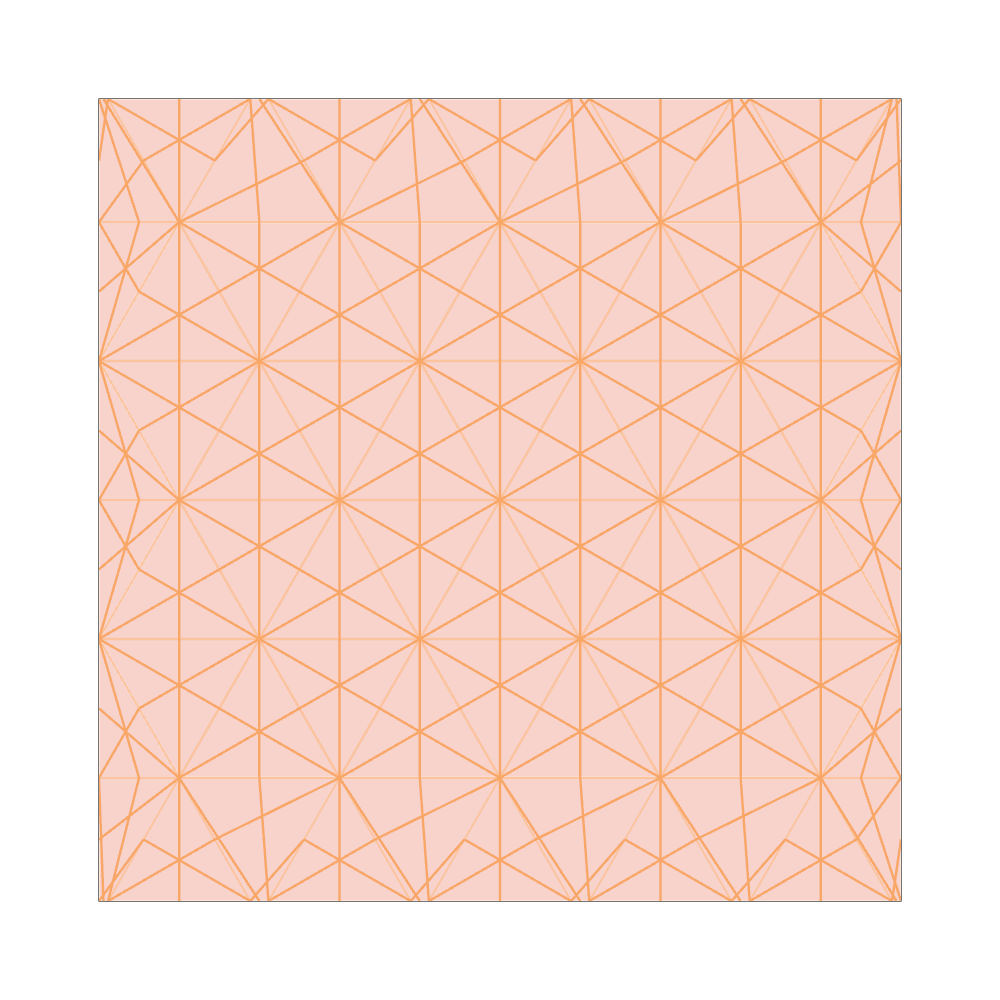
Twenty studies, one definition. Columns are the cells: a Square Grid, size 20; a Hex Grid, size 20; a Triangle Grid, size 24; and 36 seeds scattered into a Voronoi in Region. Rows are the chord families. Everything after the cells is the same across a row, so swapping the cells changes one component. Every study works on its own 120 × 120 in region, with the inner ring at 0.5 and the cells shown beneath their chords.
Fan
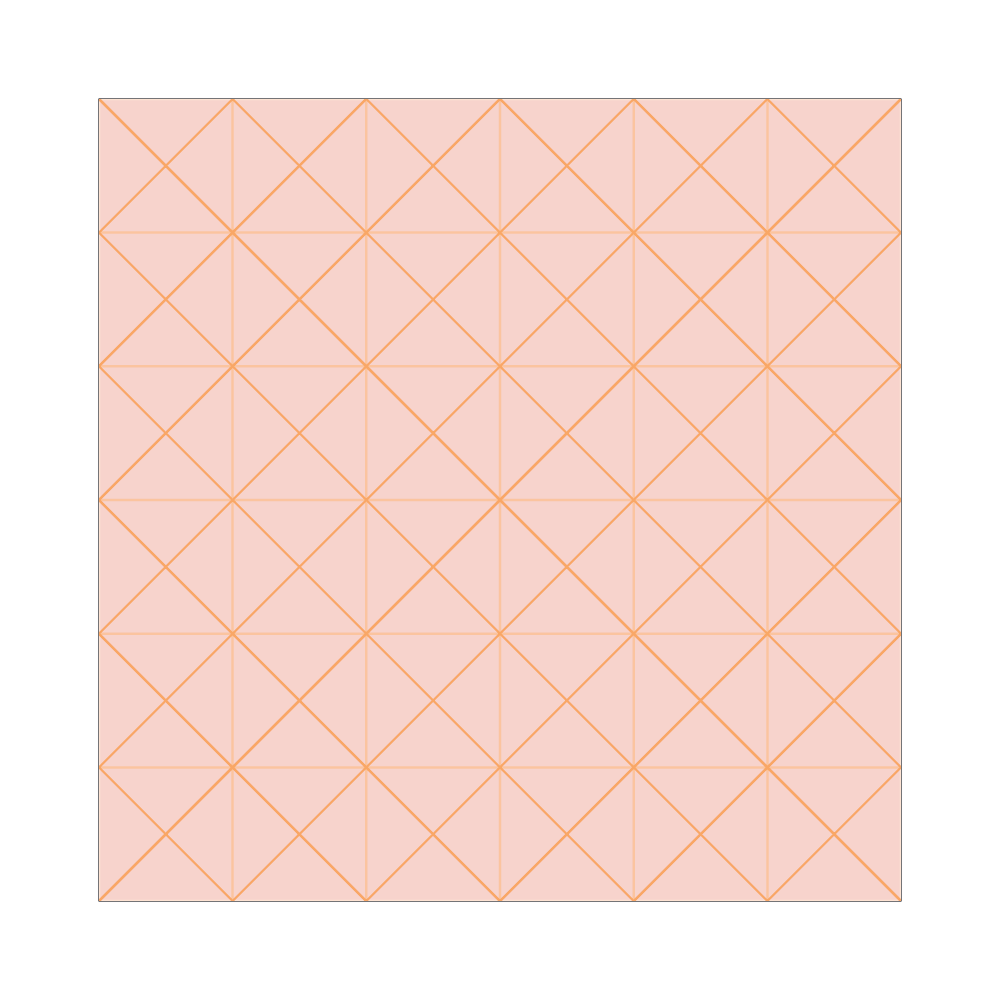
Pattern 1: each corner to the centroid.
Medial
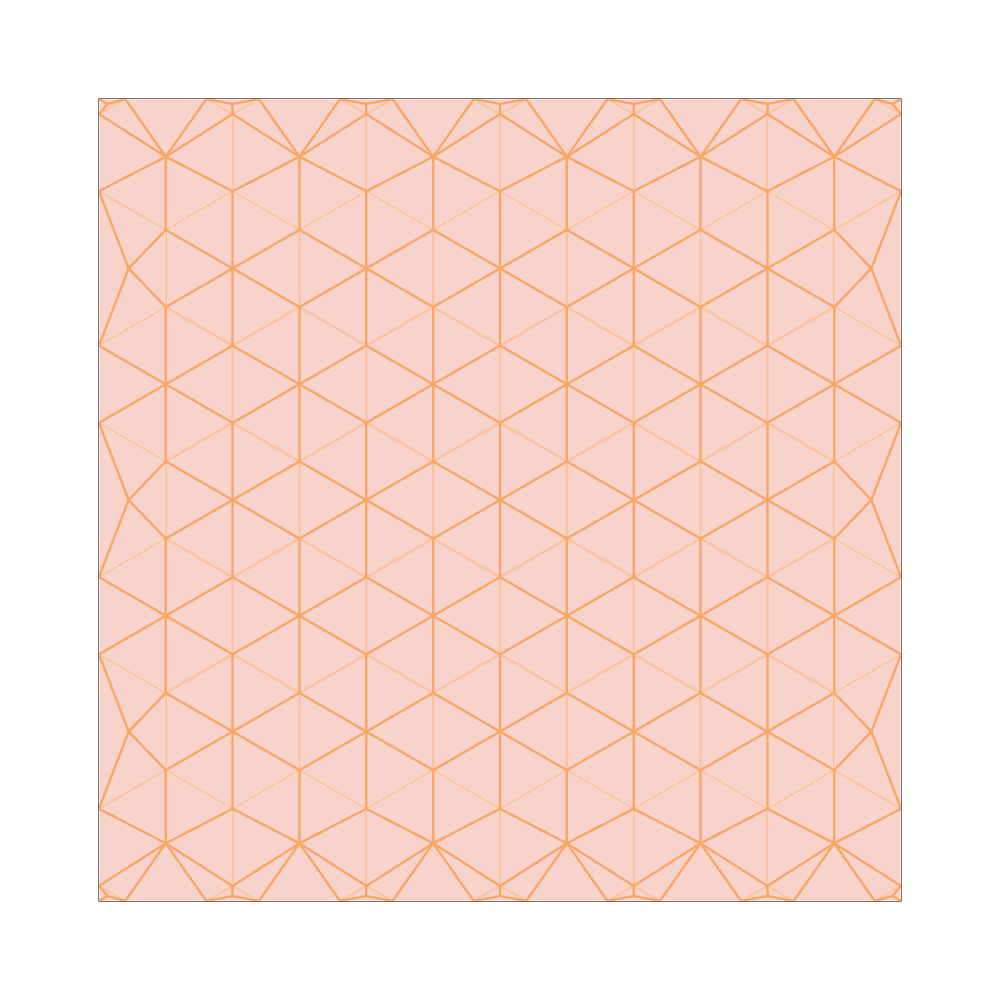
Pattern 3: each edge midpoint to the next, a smaller cell set on the midpoints.
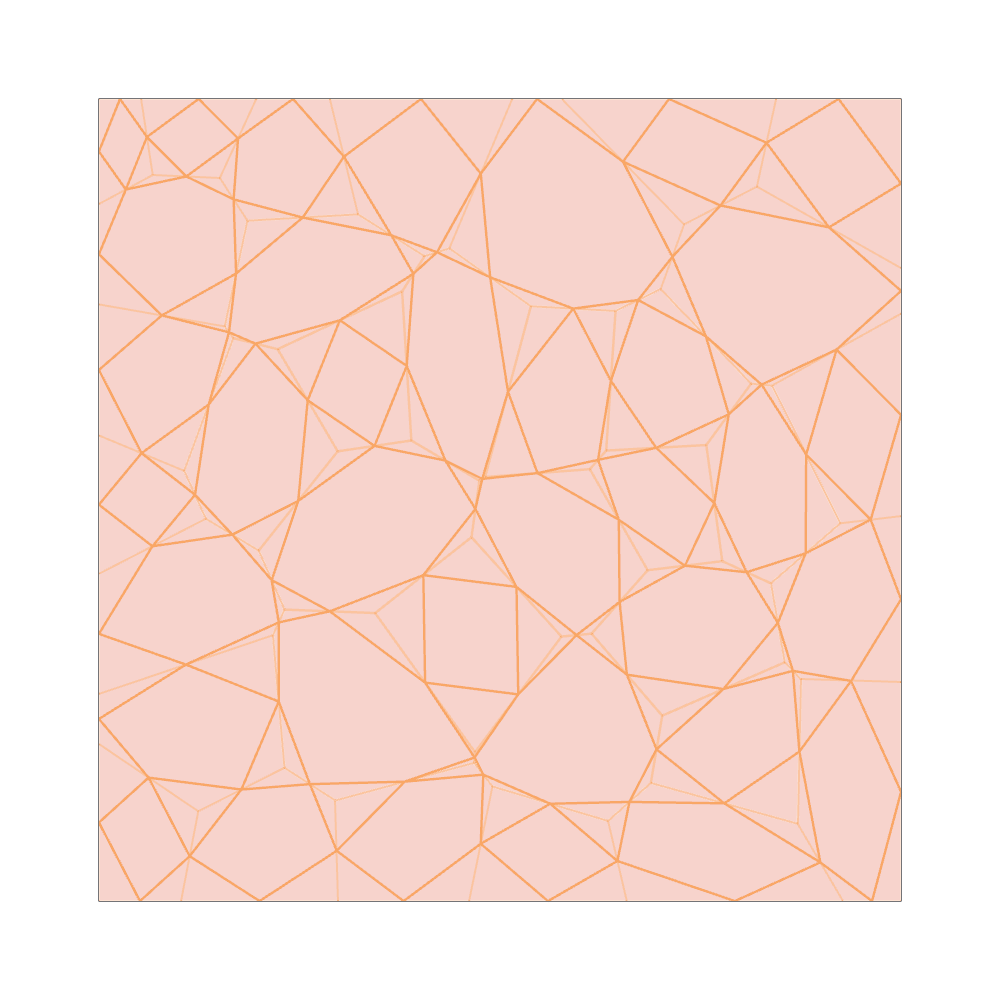
Star2
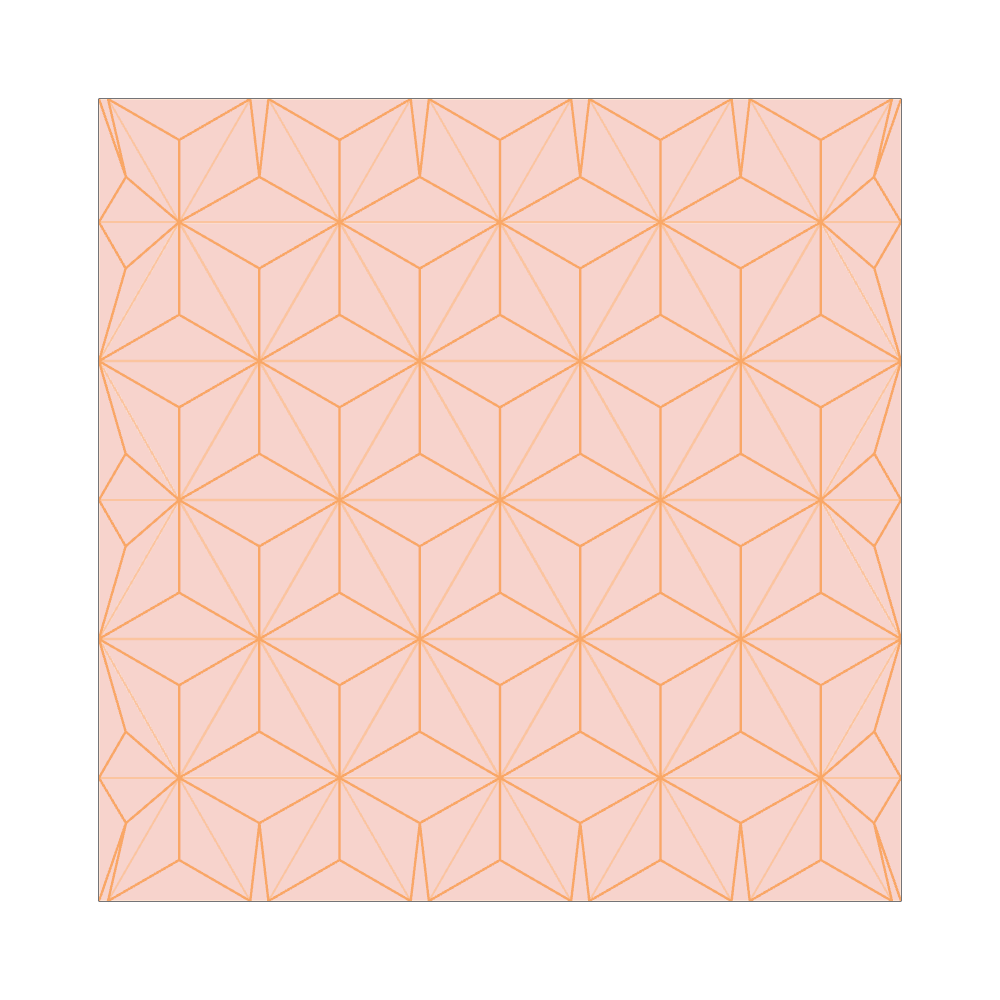
Pattern 4: each corner to the corner two along. It needs four corners or more, so whole triangles draw nothing; only the four-sided pieces the region trims from them do.
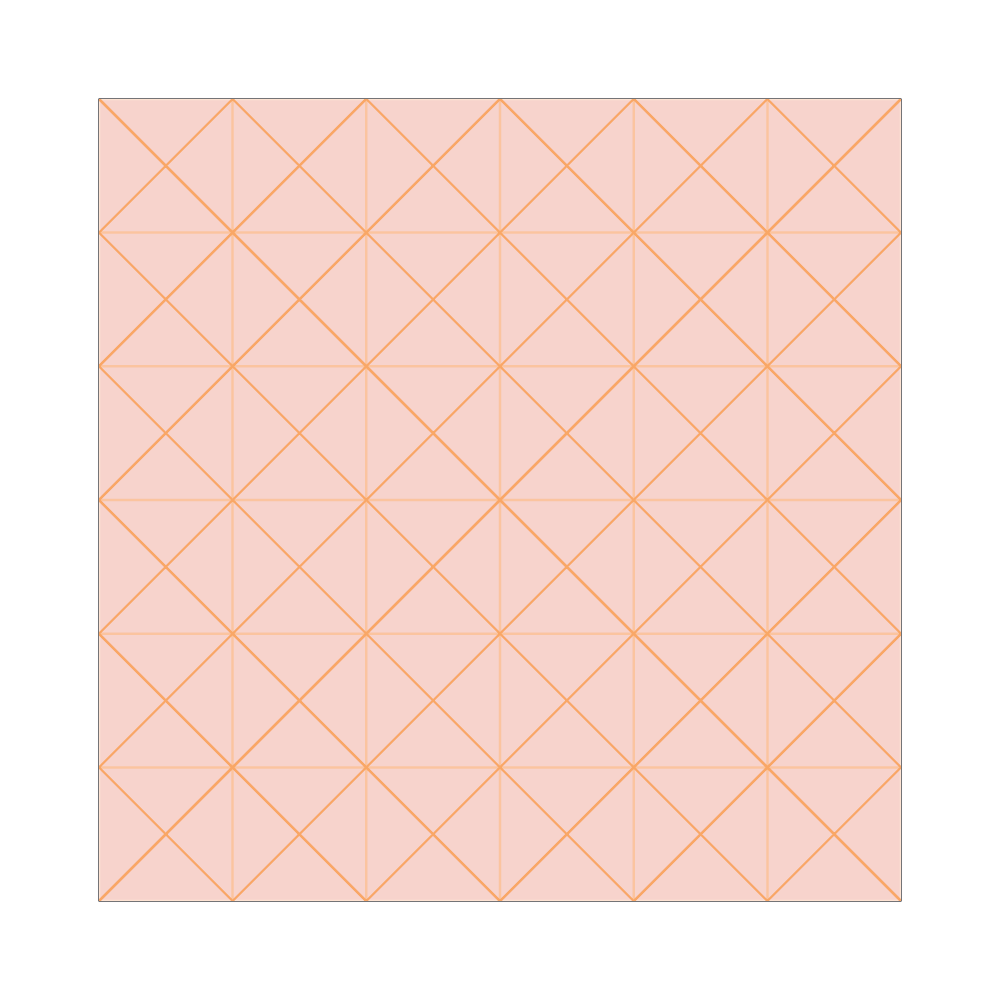
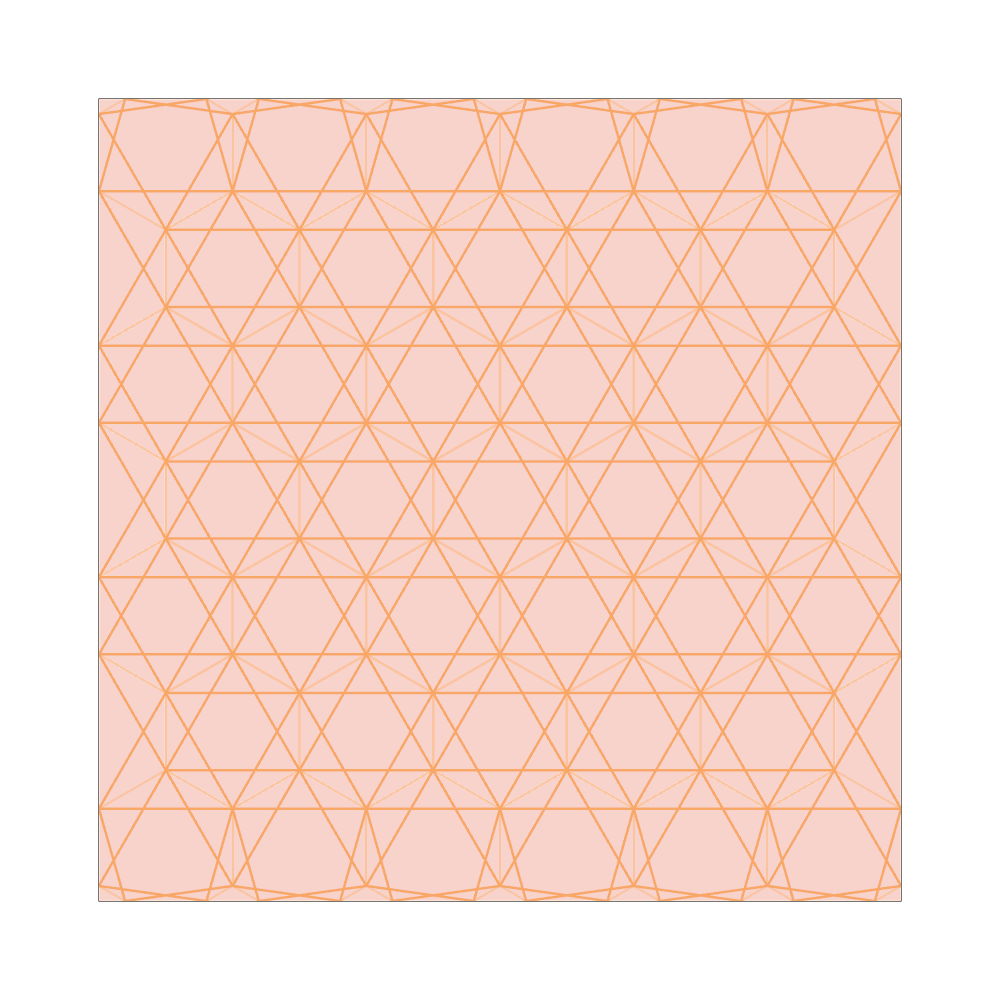
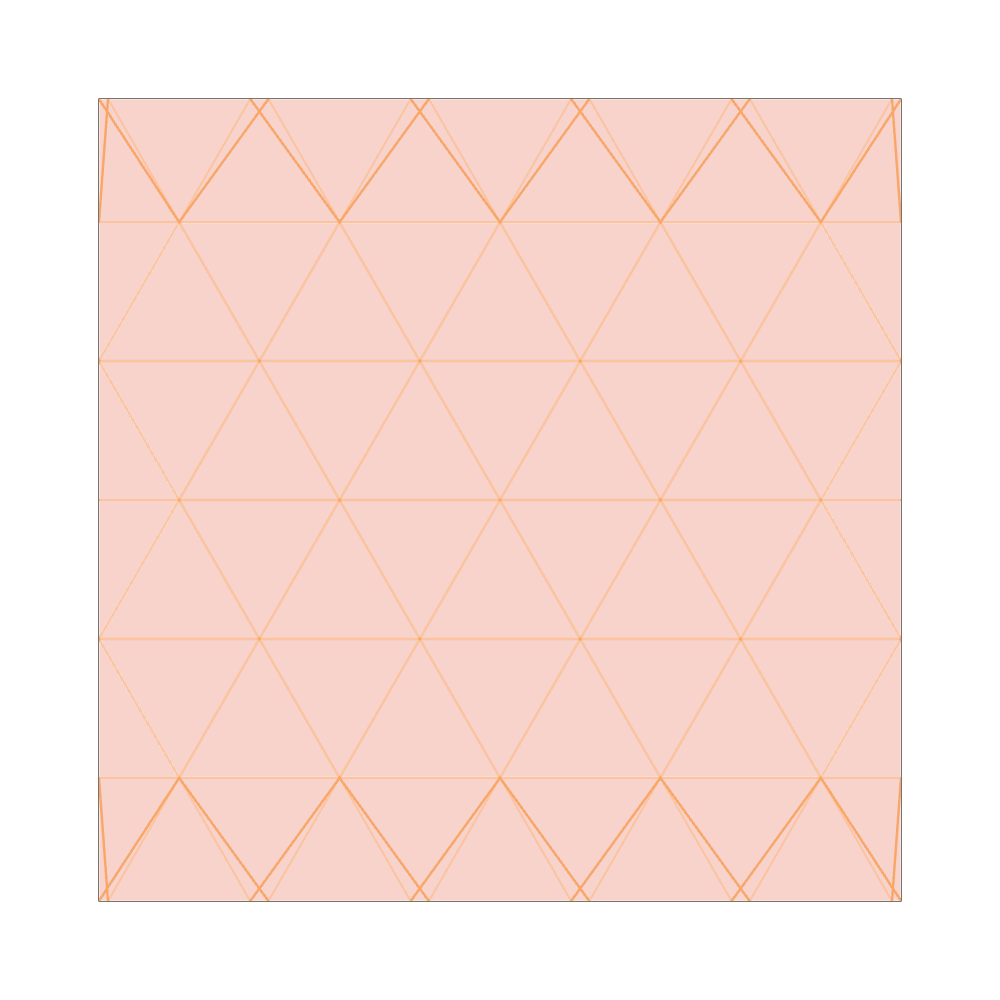
Pinwheel
Pattern 9: each corner to the midpoint of the following edge, so every cell turns the same way.
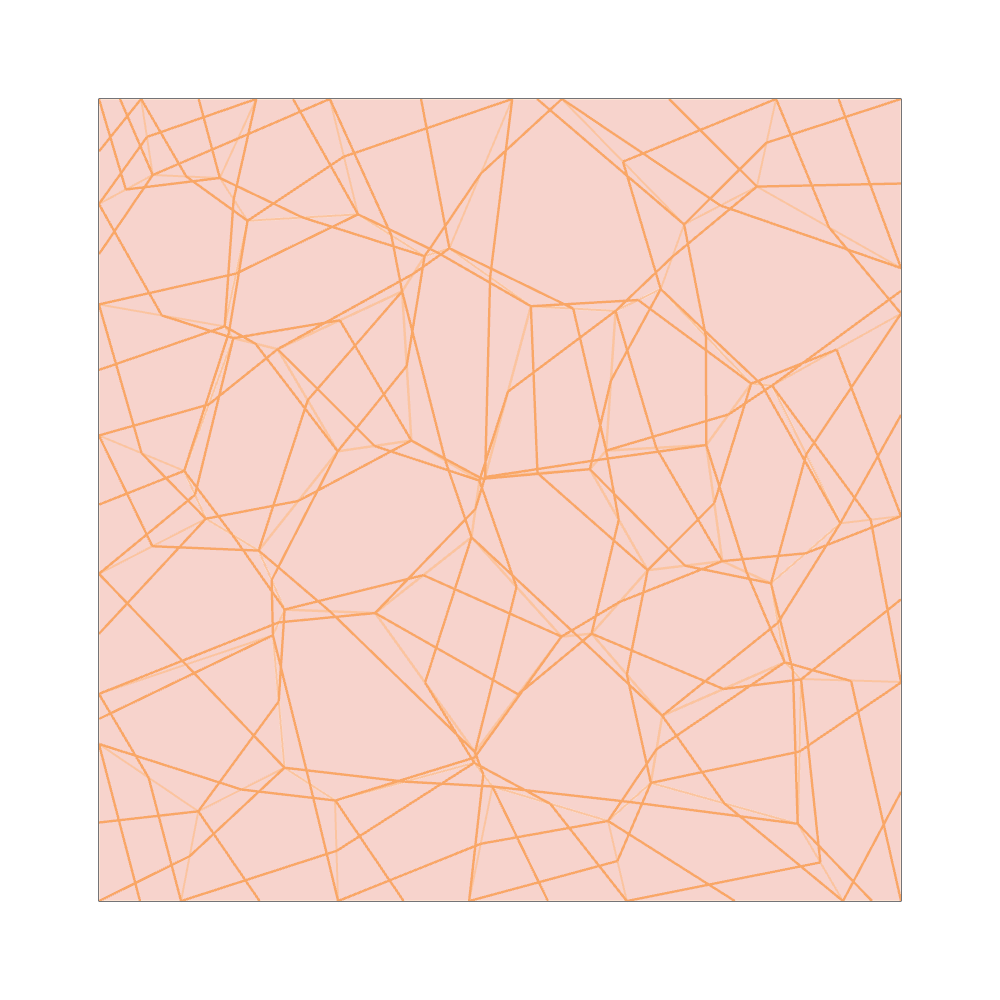
Inner + Brace
Pattern 37: two families at once, the inner ring at half size and a brace from each corner to its inner corner.