Parametric Studies
Modifier Studies
What an attractor can do to a grid: scale, rotate, cull and extrude
Oct 28, 2026 Alexandria Phoenix 2.0
Overview
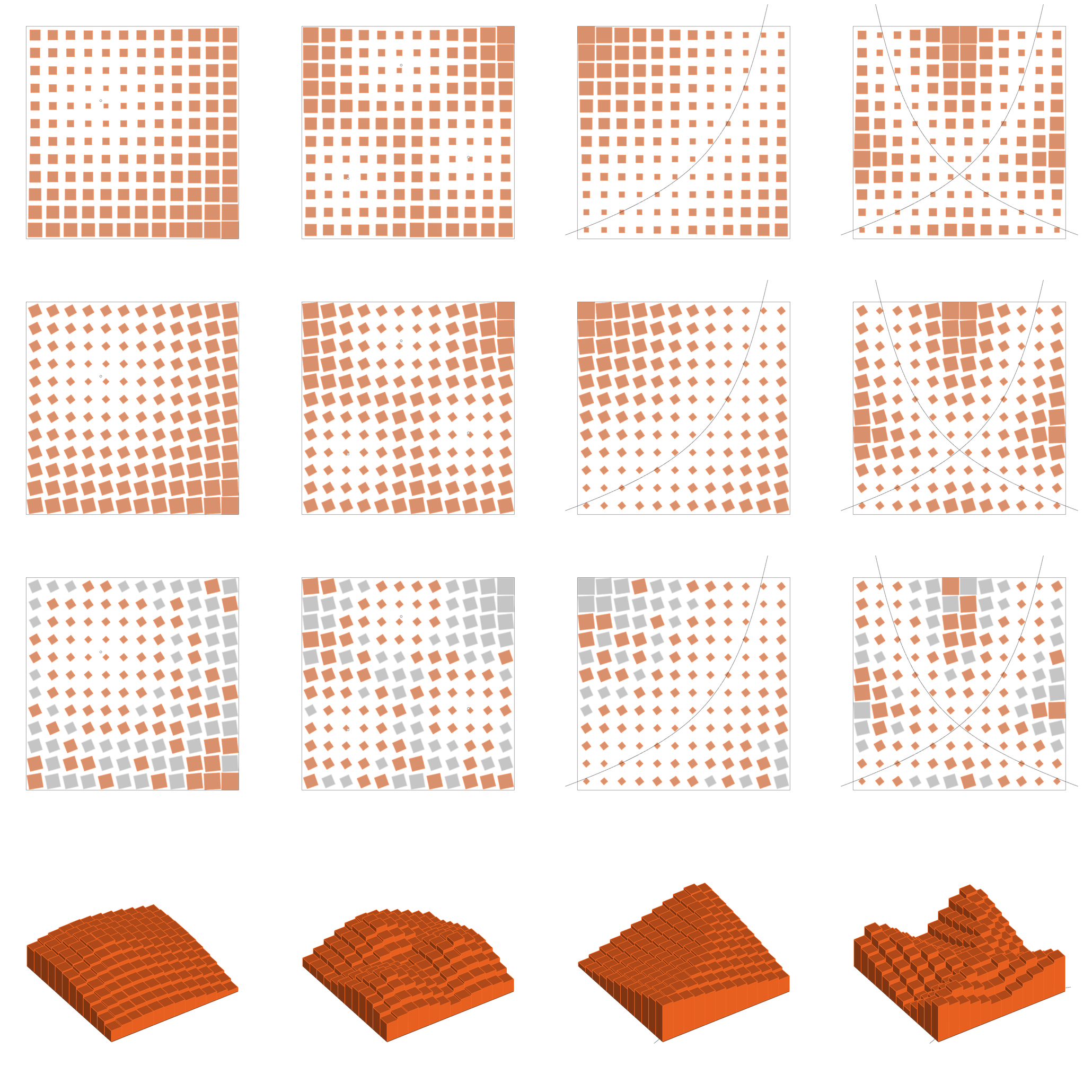
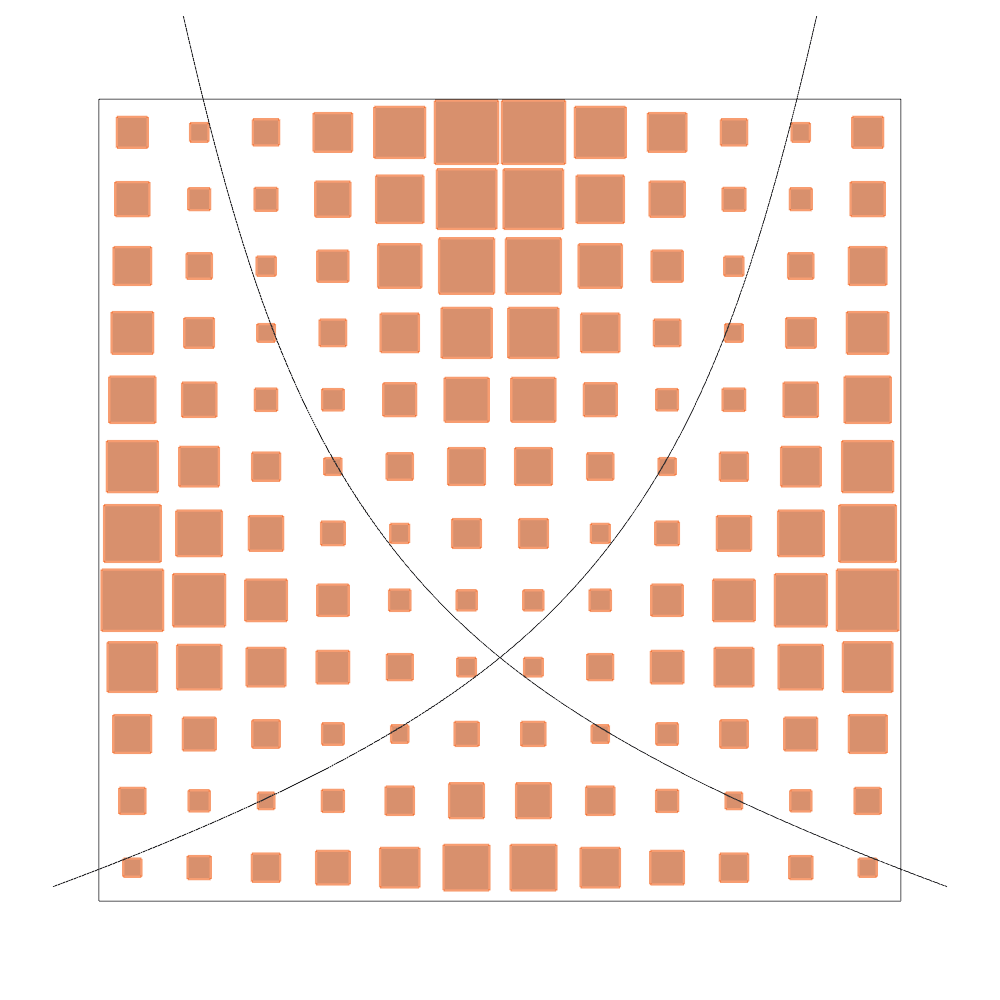
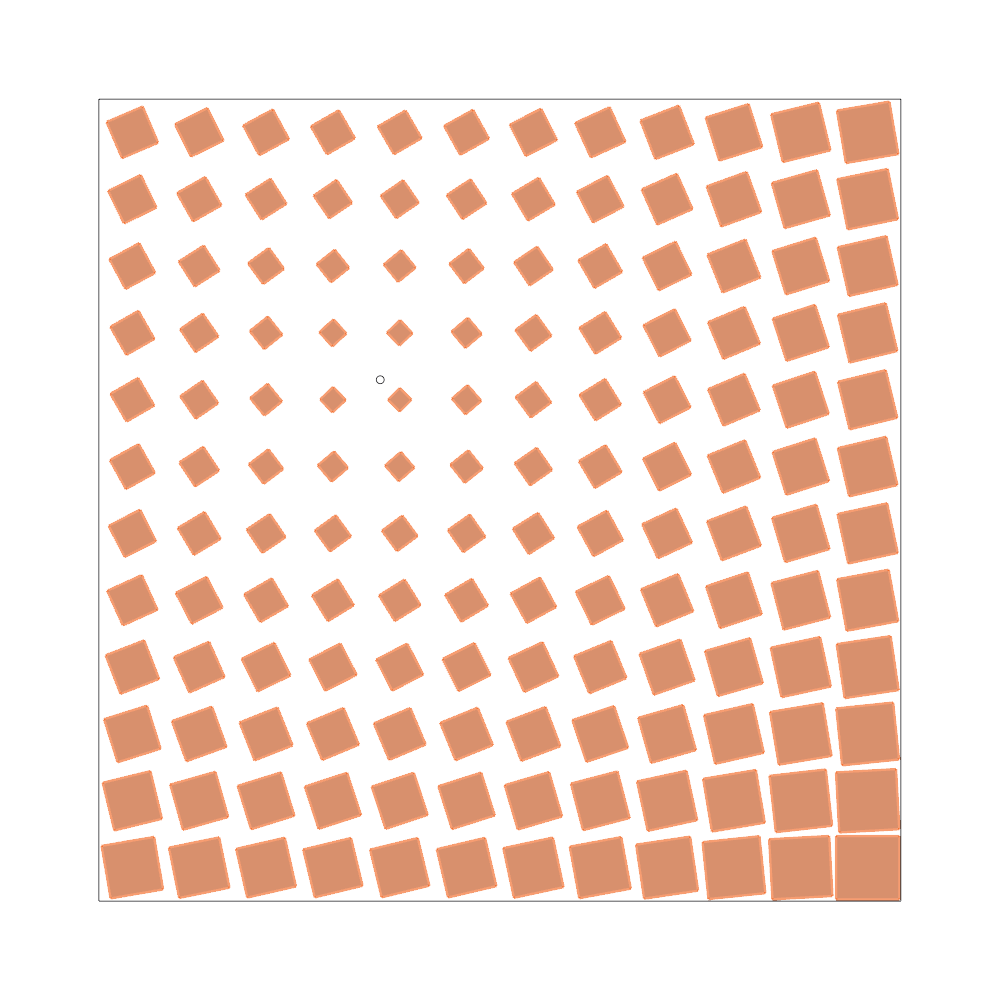
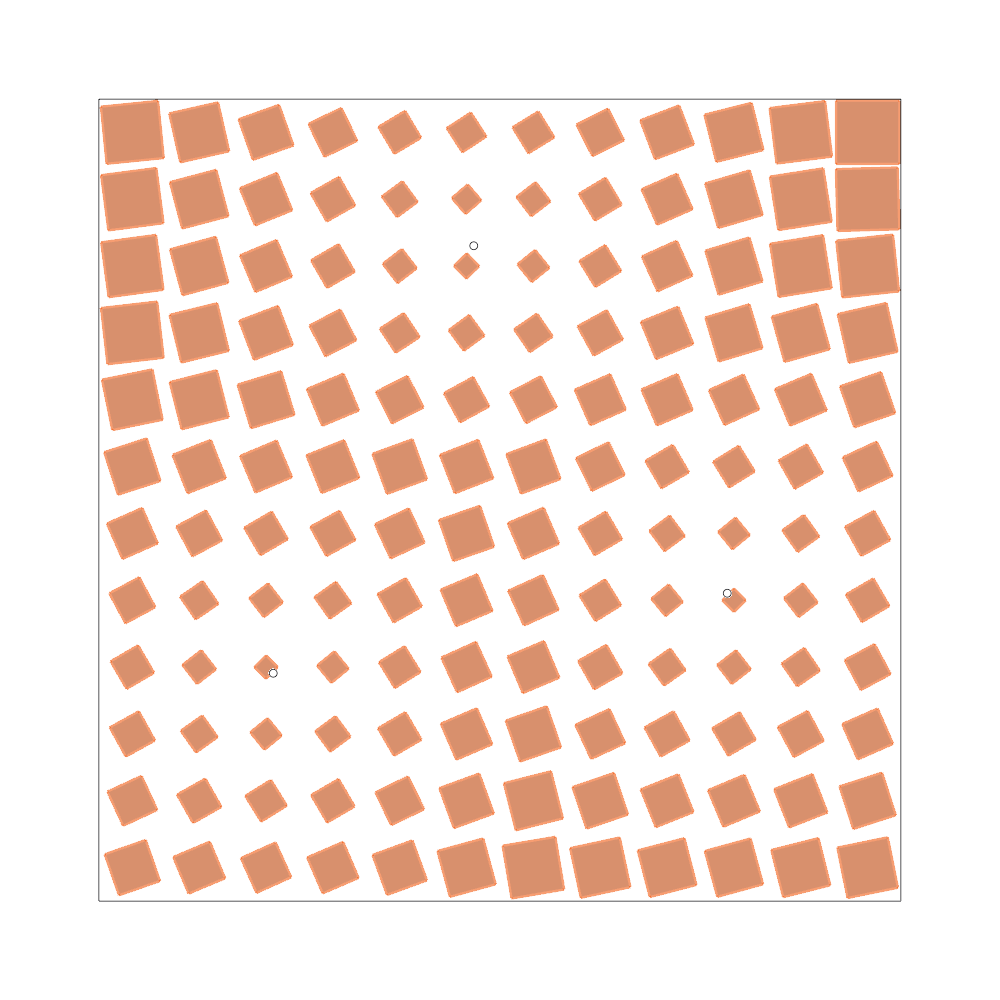
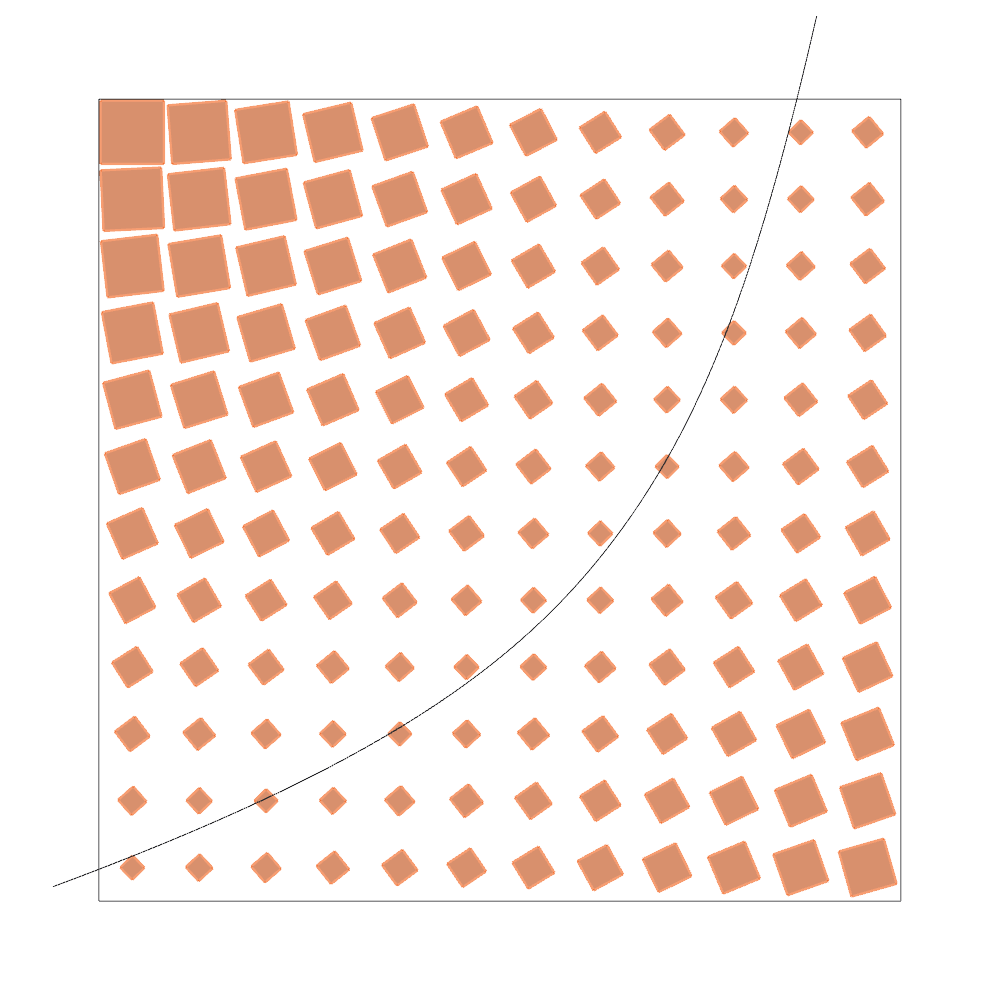
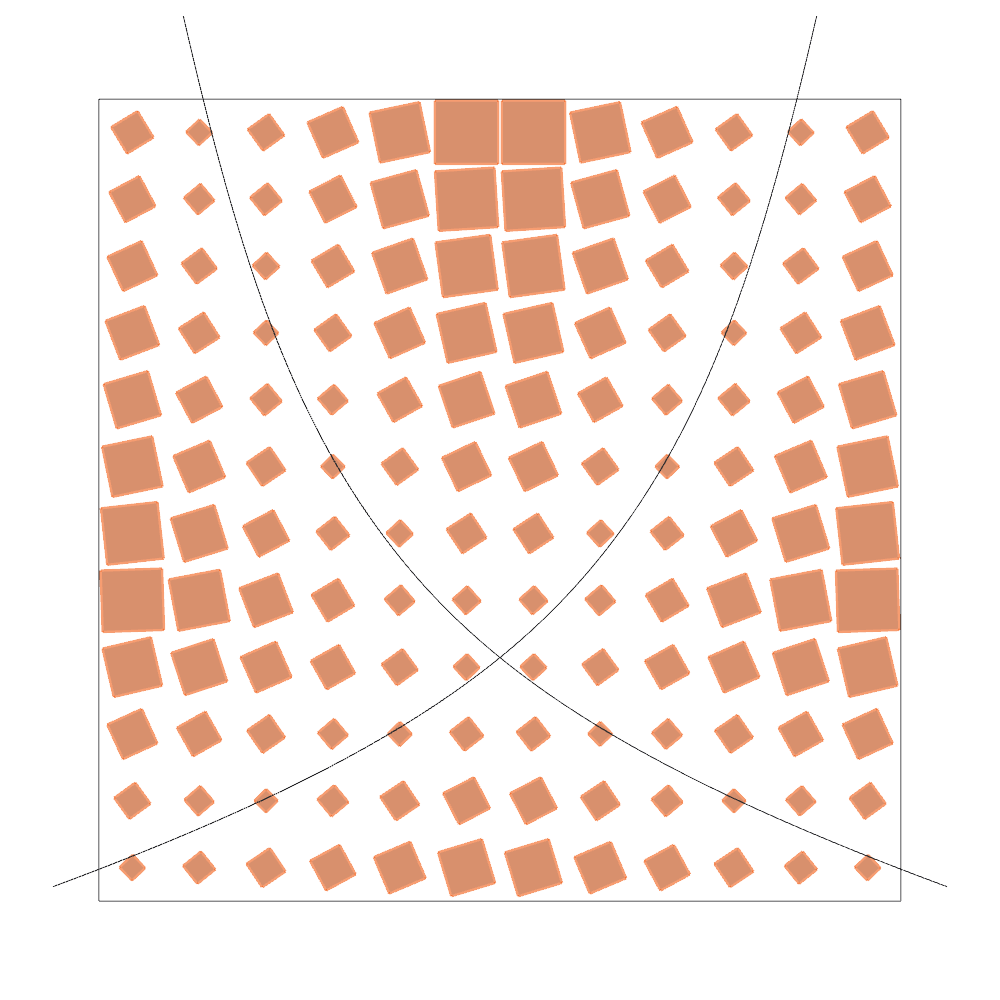
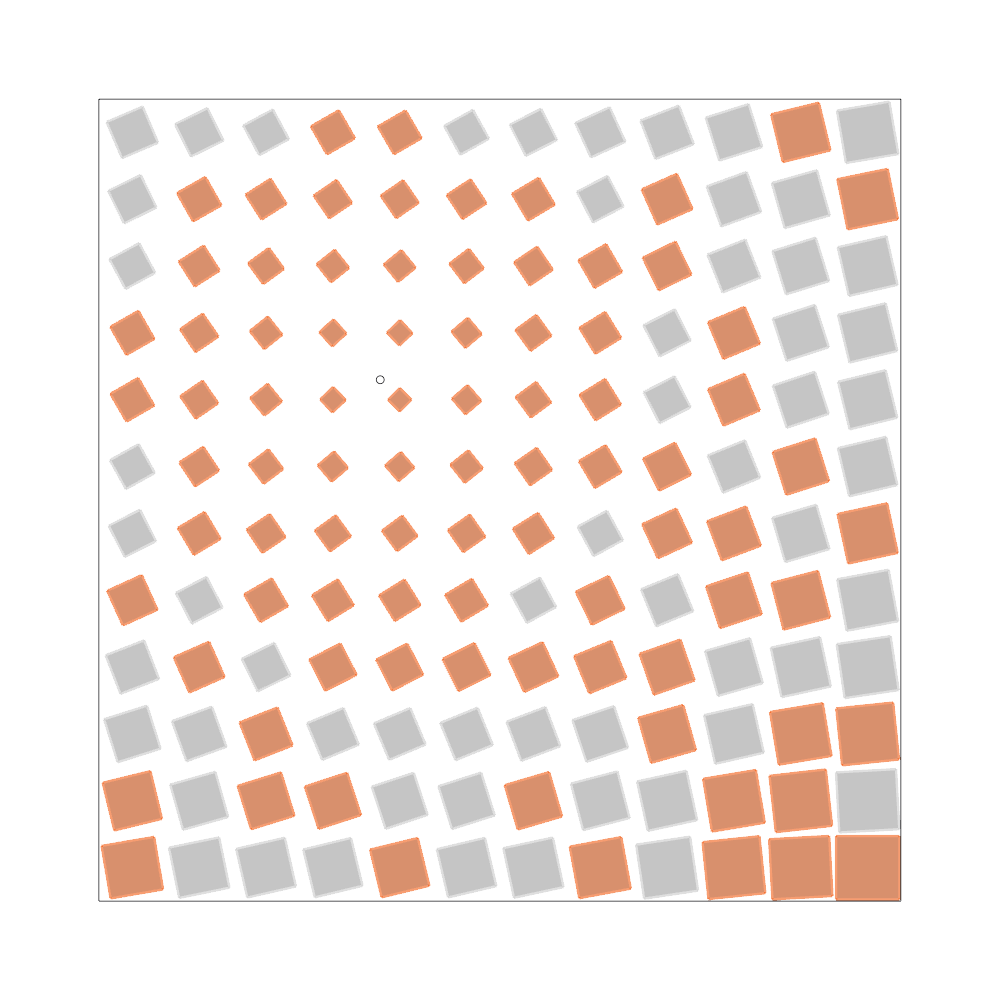
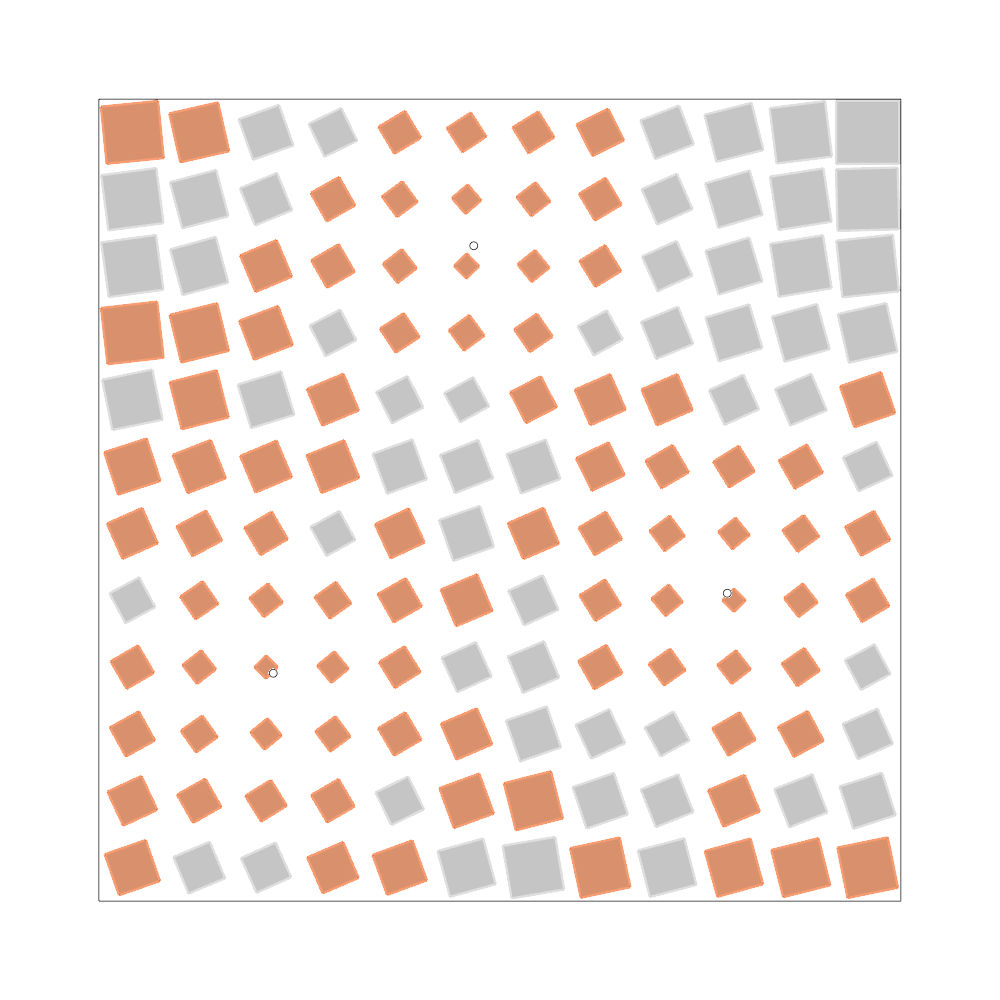
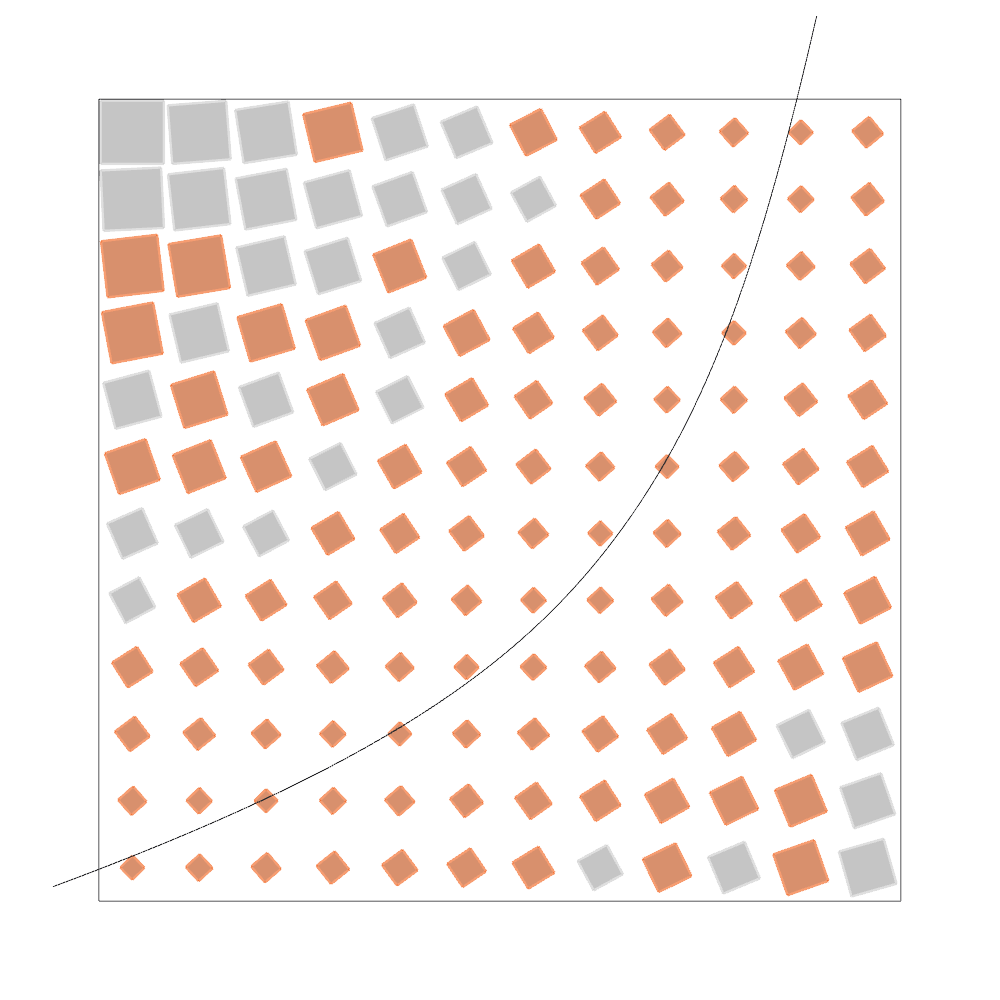
Sixteen studies, one definition. Columns are the attractor: one point, three points, one curve and two curves, where each cell answers to the nearest. Rows are the solution: scale; scale and rotate; scale, rotate and cull; and extrude. Everything else is held the same so the attractor is the only thing that changes across a row: every study runs one Square Grid, size 10, over its own 120 × 120 in region (144 cells), and every attractor sits in the same place on its tile.
Only the start of each chain differs. Point Remap or Curve Remap measures each cell to the attractor and gives 0 nearest and 1 furthest; from those values on, a row is identical across its four columns, so swapping the attractor changes one component.
Scale
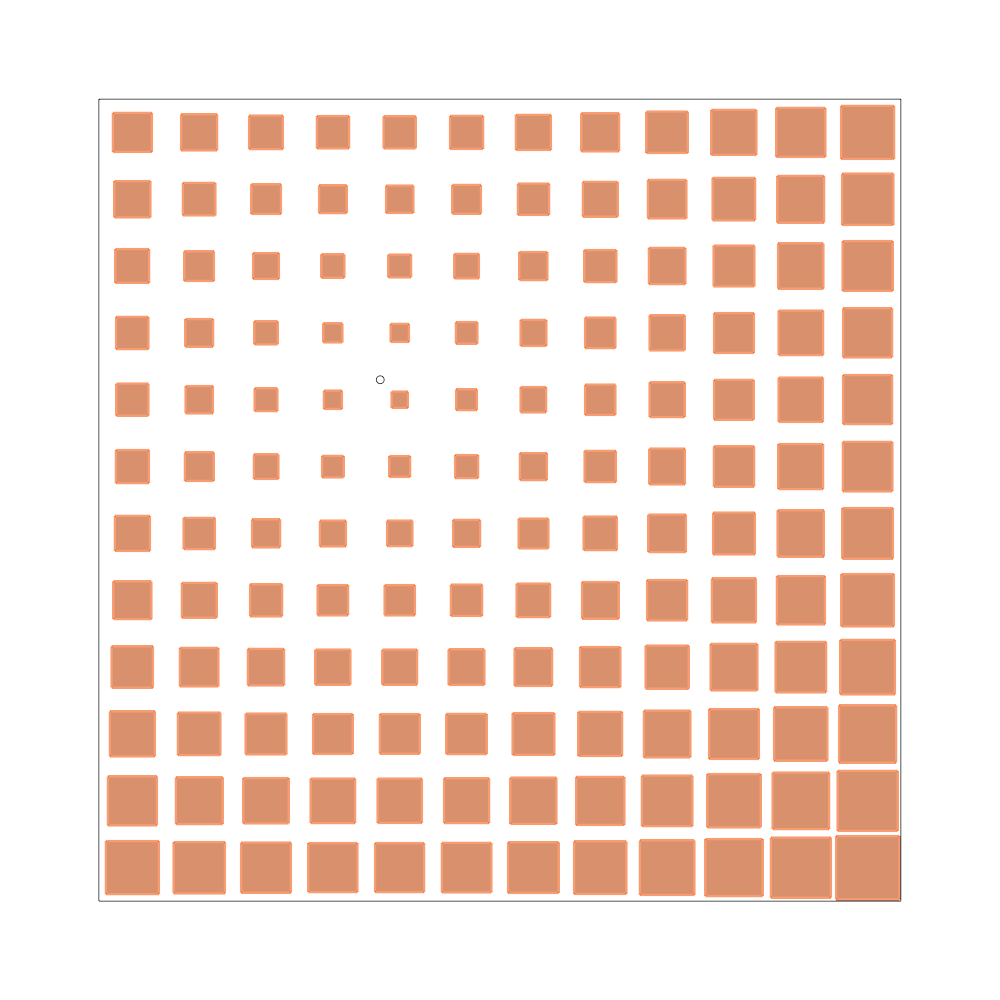
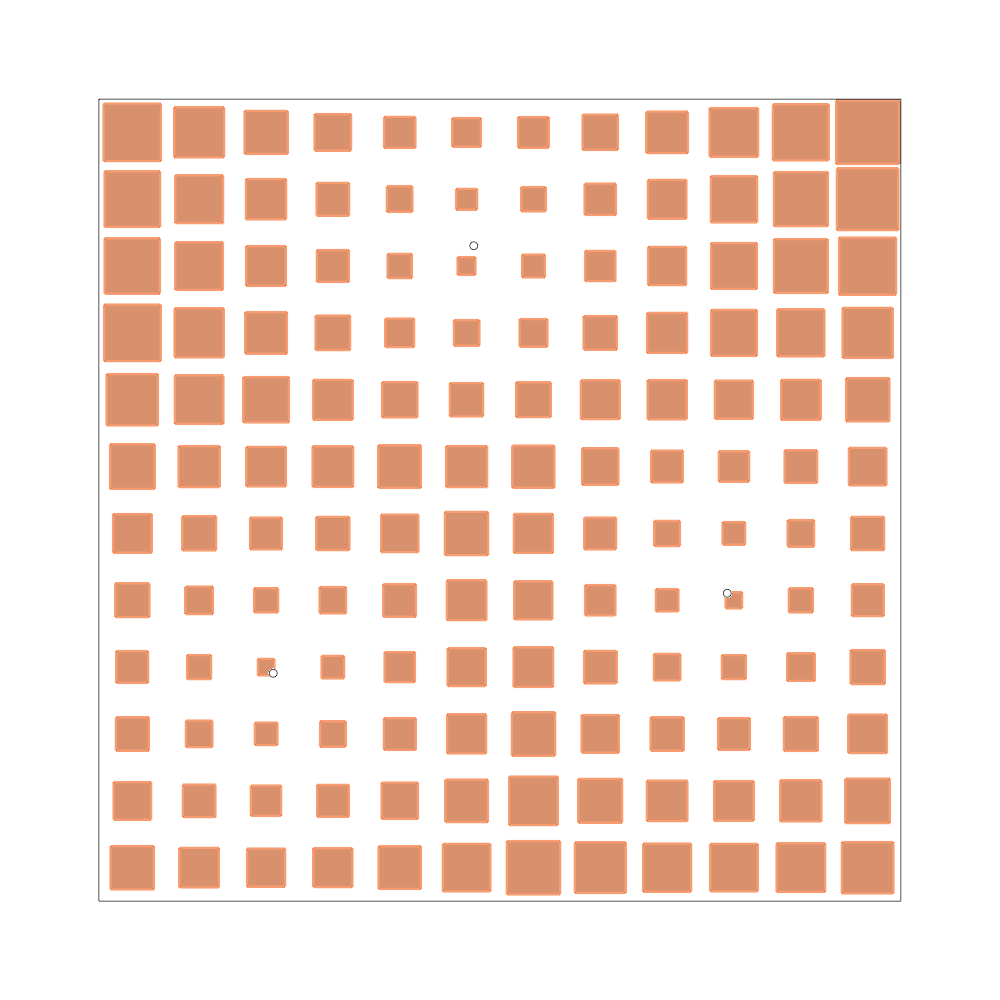
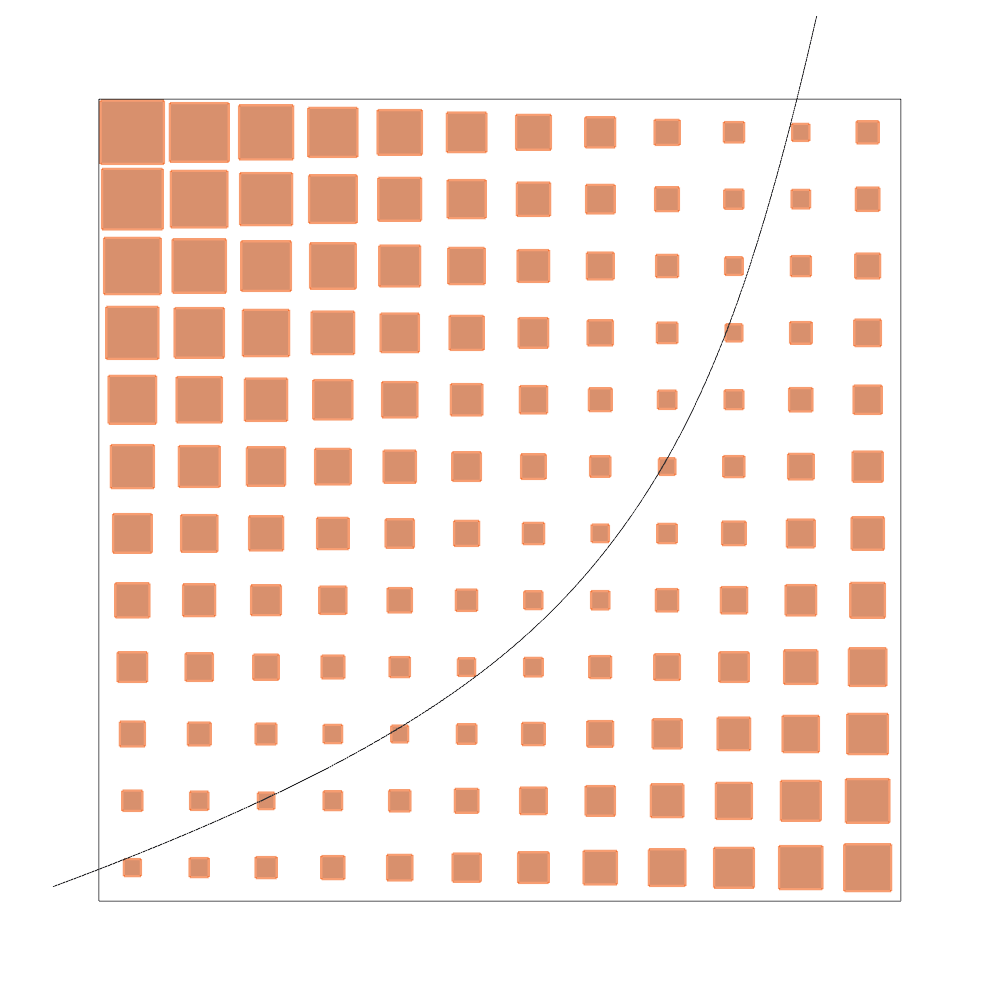
Each cell scales about its centre from 0.25 nearest the attractor to 0.95 furthest from it.
Scale + Rotate
Scaled as above, then turned by a second remap of the same values: 45° nearest the attractor to 0° furthest from it.
-
Multipoint
Square Grid → Point Remap → Value Remap → Scale by Values → Rotate by Values
3 points 144 cells
Full Size -
Multicurve
Square Grid → Curve Remap → Value Remap → Scale by Values → Rotate by Values
2 curves 144 cells
Full Size
Scale + Rotate + Cull
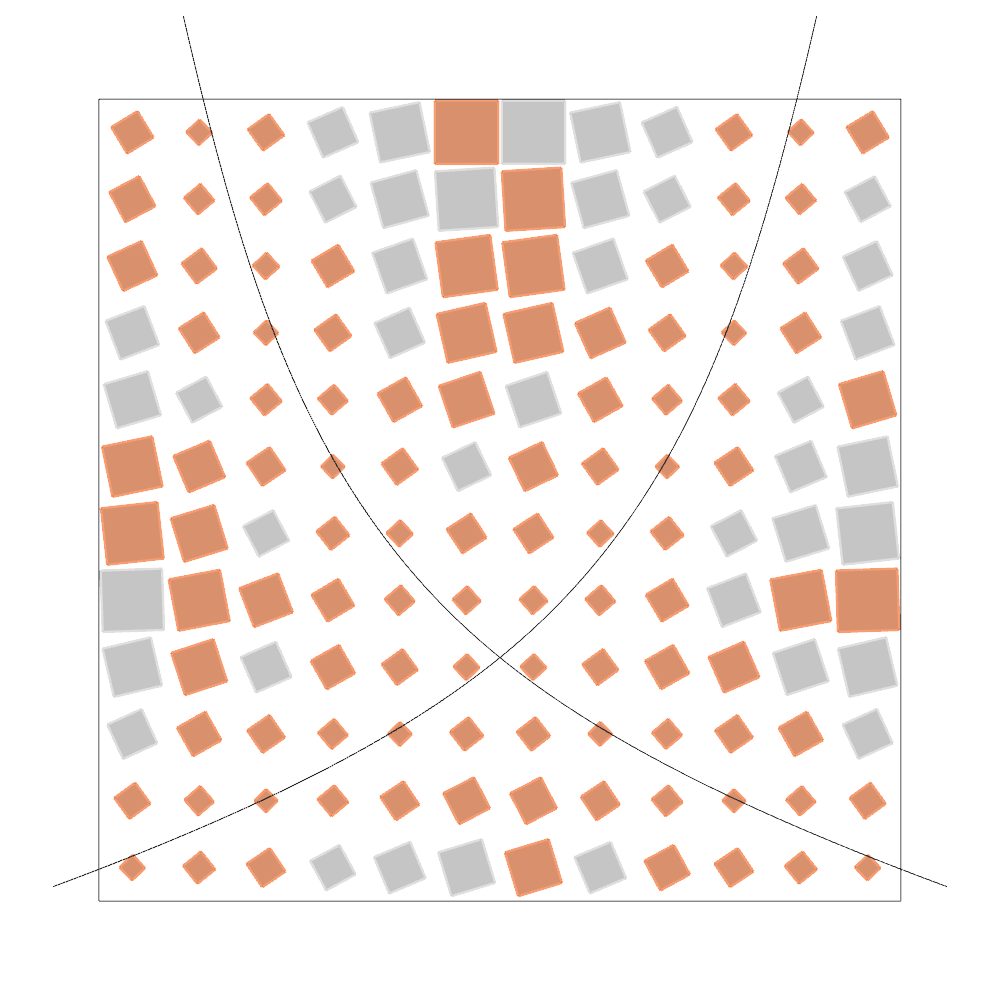
Scaled and turned as above, then Percent Cull removes 60% of the cells beyond 0.35 of the distance range, picked at random (seed 3). The culled cells stay in grey.
-
Multipoint
Square Grid → Point Remap → Scale by Values → Rotate by Values → Percent Cull
3 points 88 of 144 kept
Full Size -
Multicurve
Square Grid → Curve Remap → Scale by Values → Rotate by Values → Percent Cull
2 curves 104 of 144 kept
Full Size
Extrude
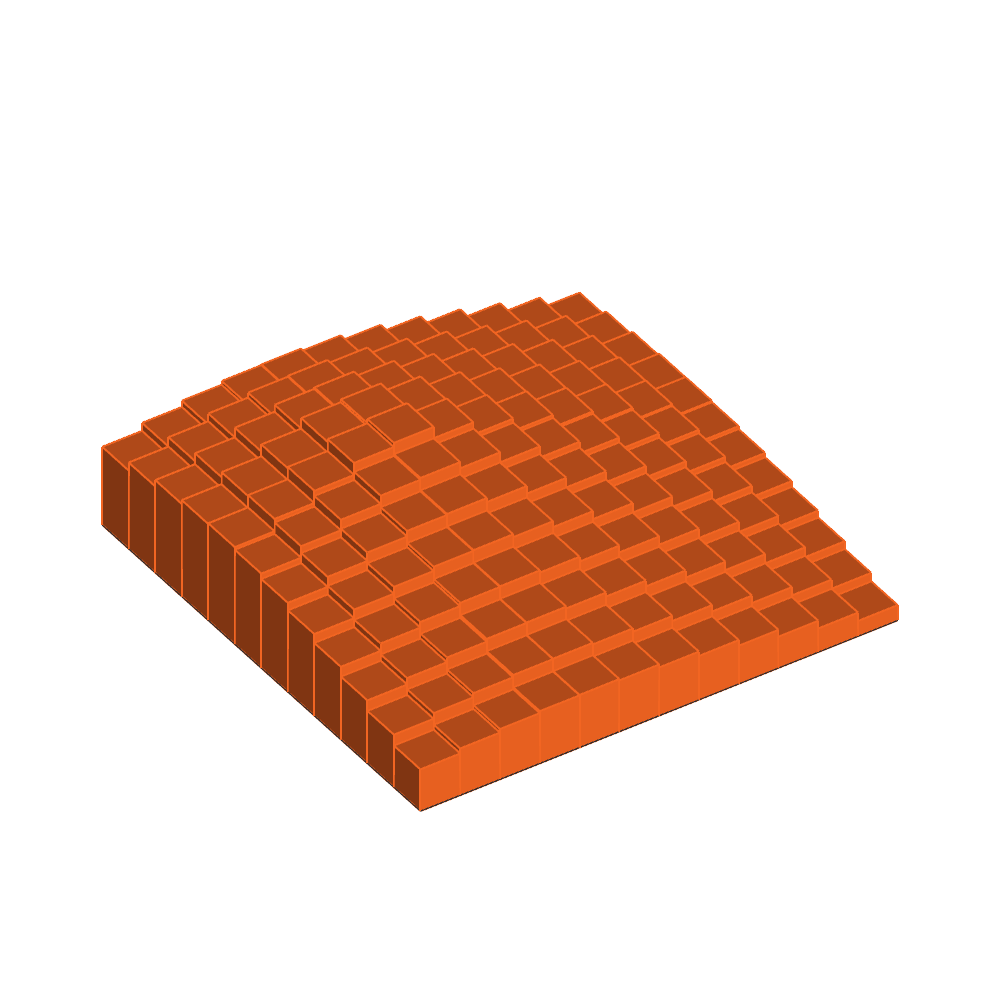
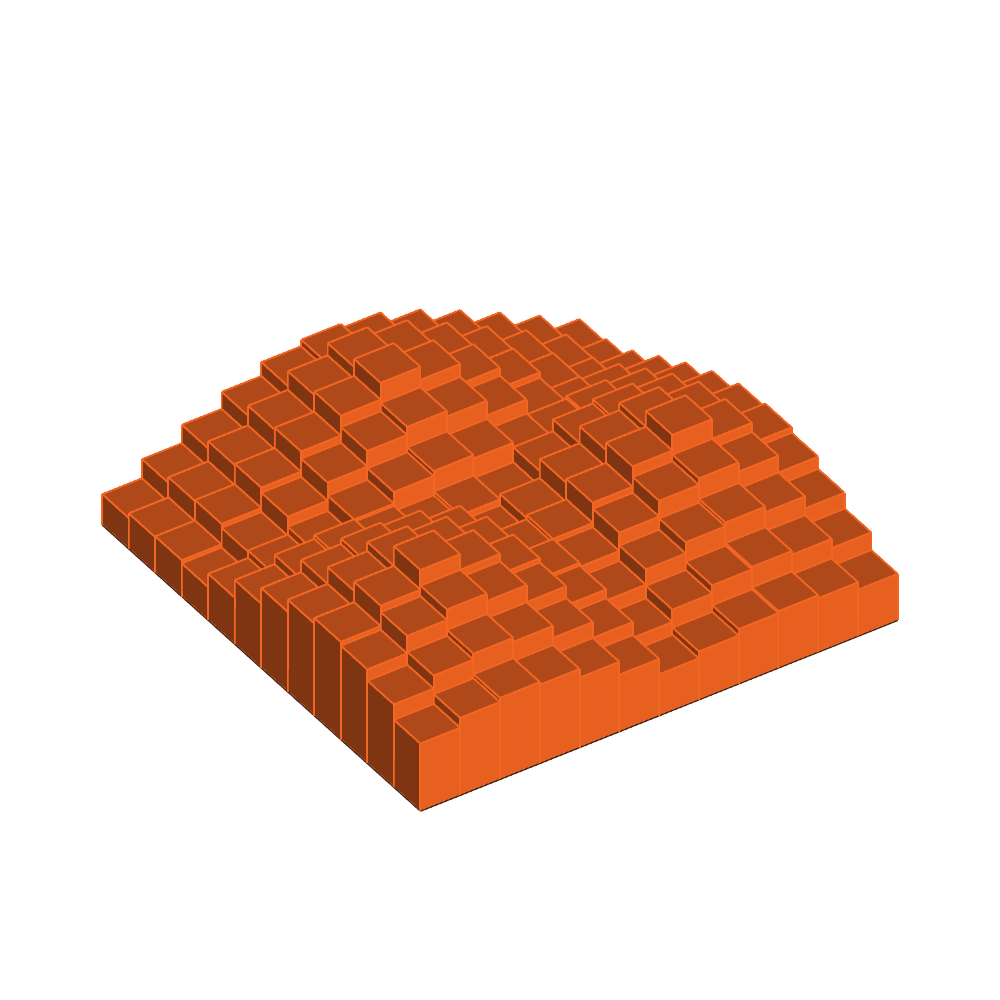
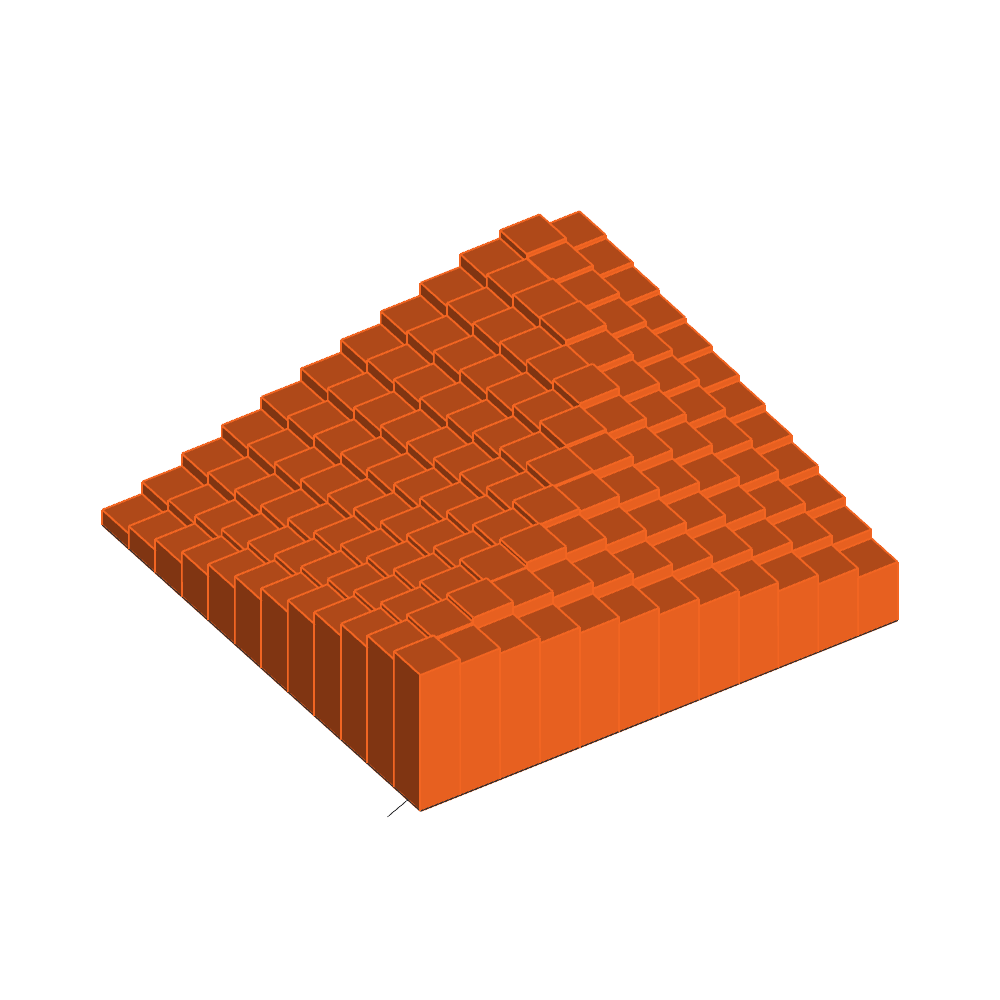
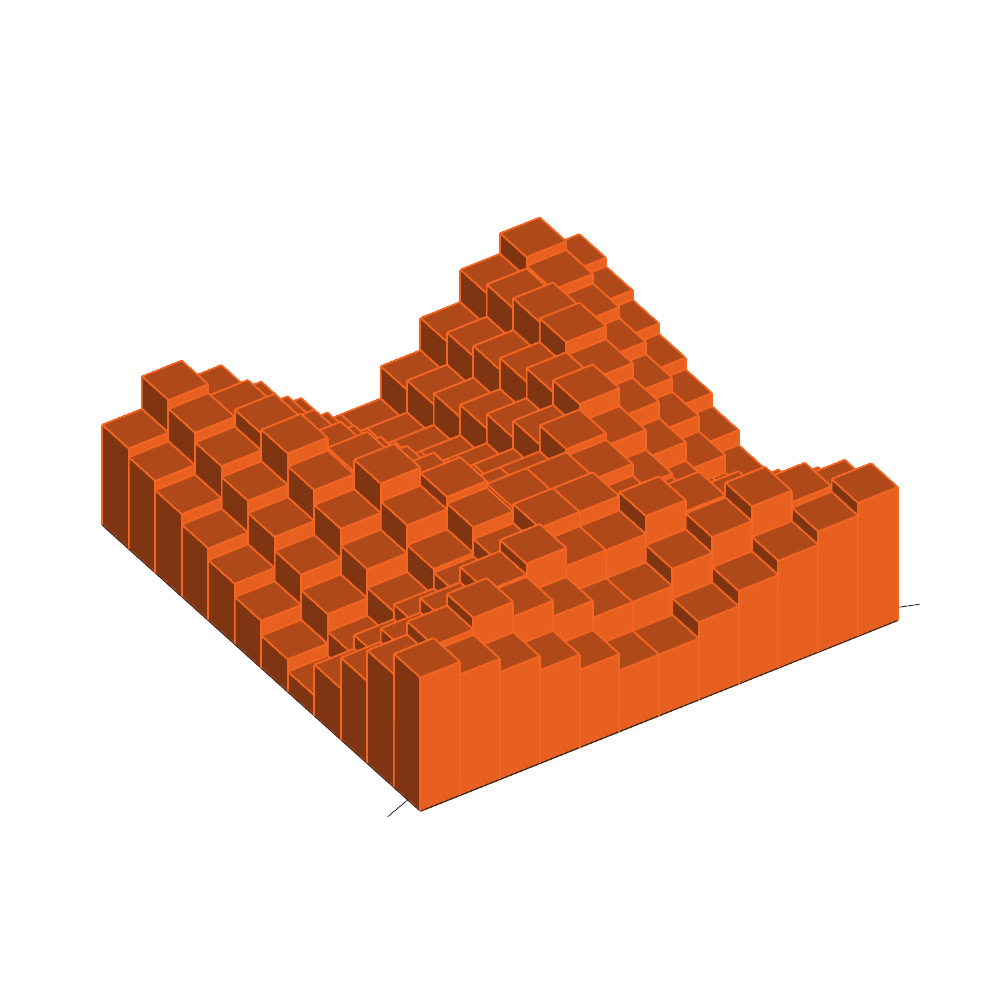
Each cell becomes a capped solid, 36 in tall nearest the attractor down to 4 in furthest from it.
-
Multipoint
Square Grid → Point Remap → Value Remap → Unit Z → Extrude → Cap Holes
3 points 144 solids
Full Size -
Multicurve
Square Grid → Curve Remap → Value Remap → Unit Z → Extrude → Cap Holes
2 curves 144 solids
Full Size